There are usually around 10-15 cows at YML. Right now, there are both Brahman, and Angus-cross breeds.
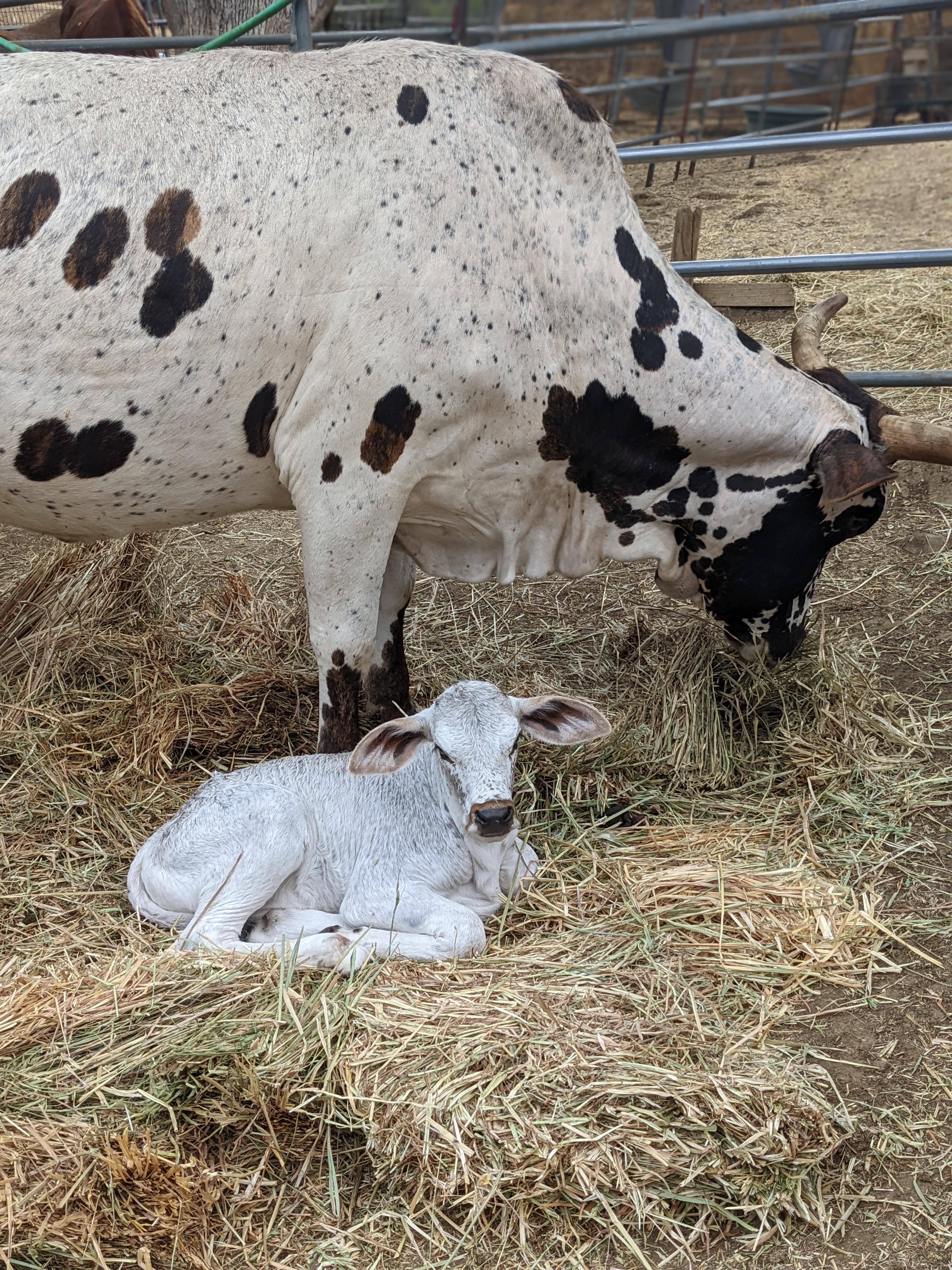
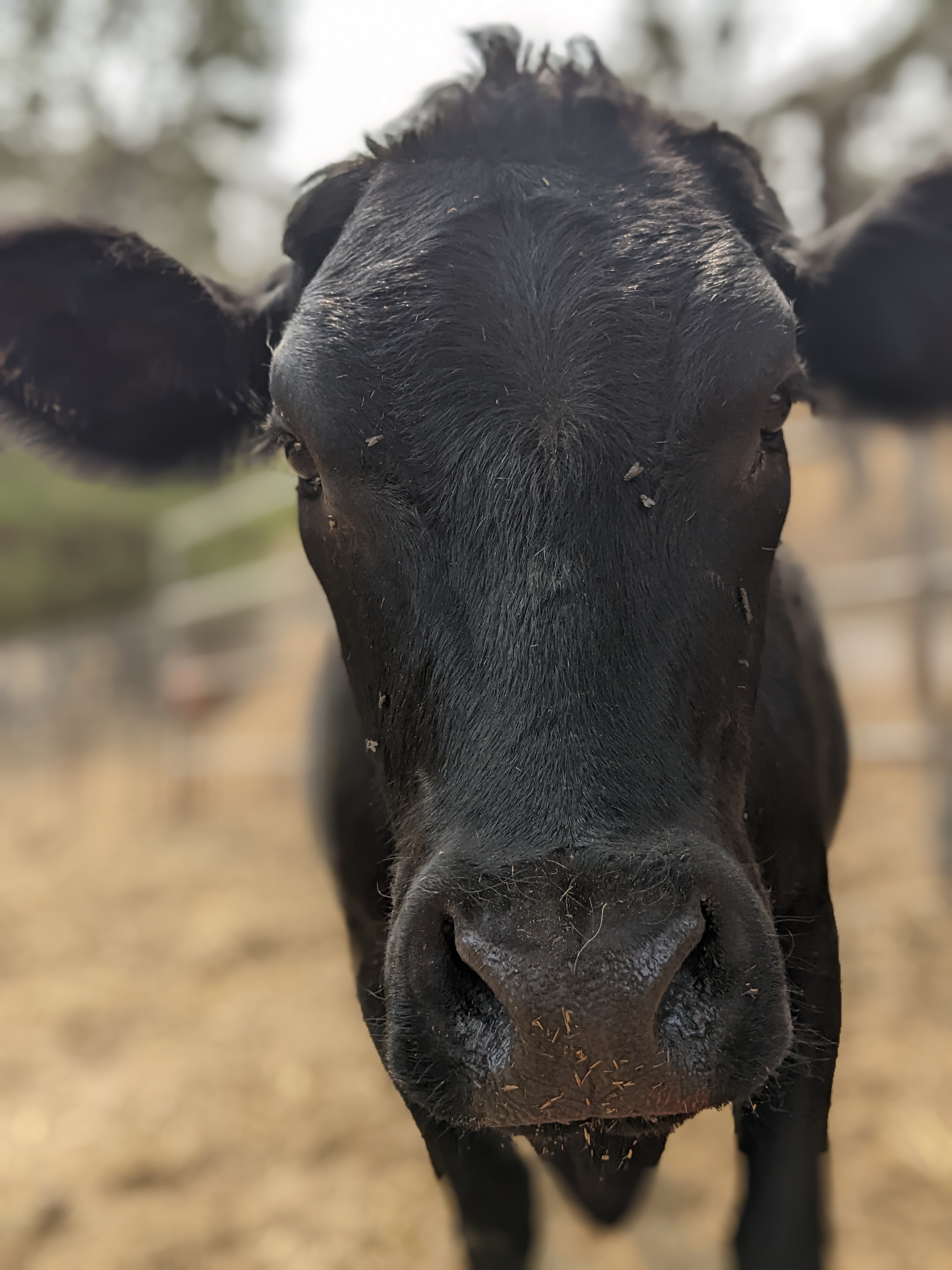
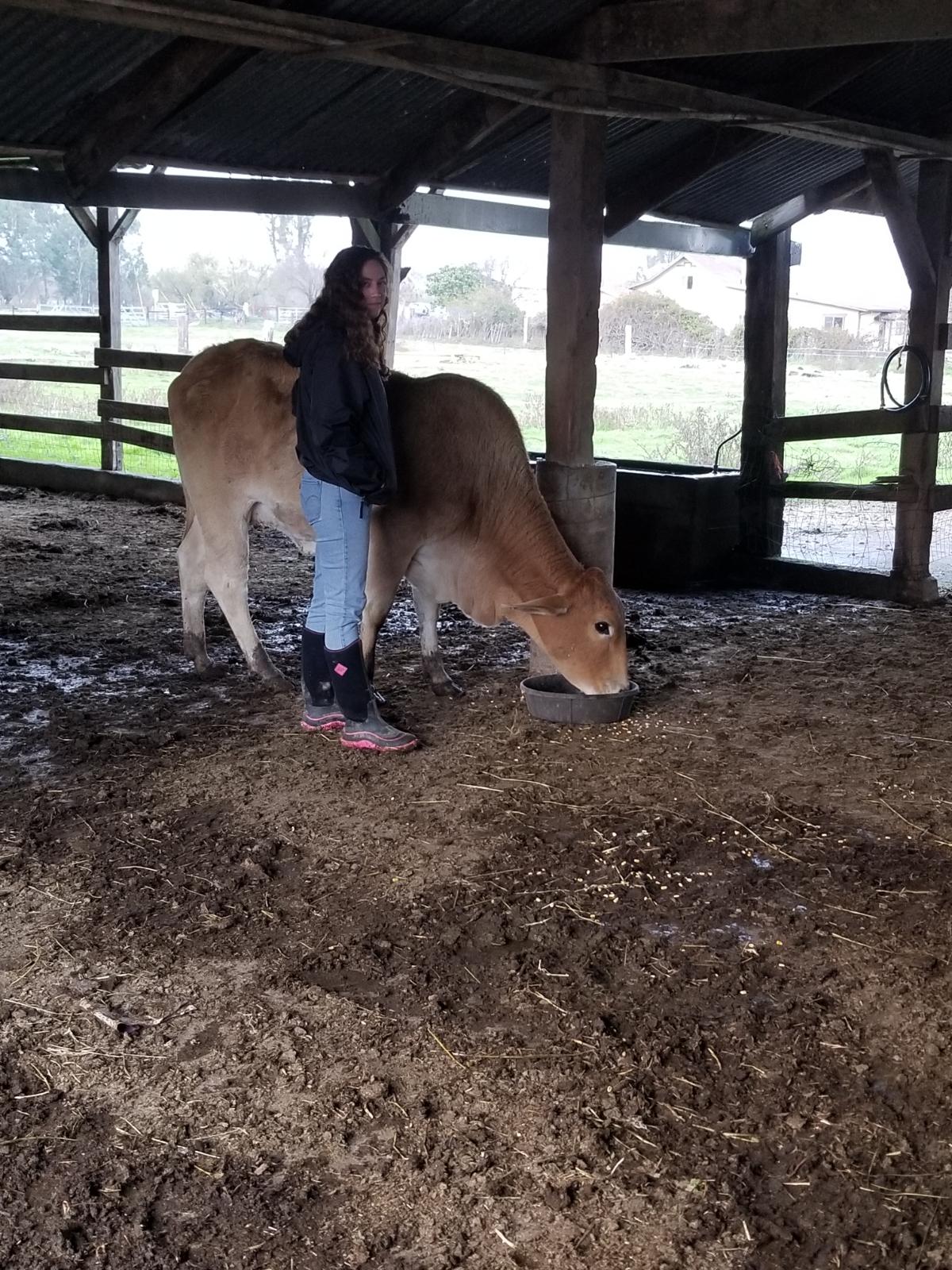
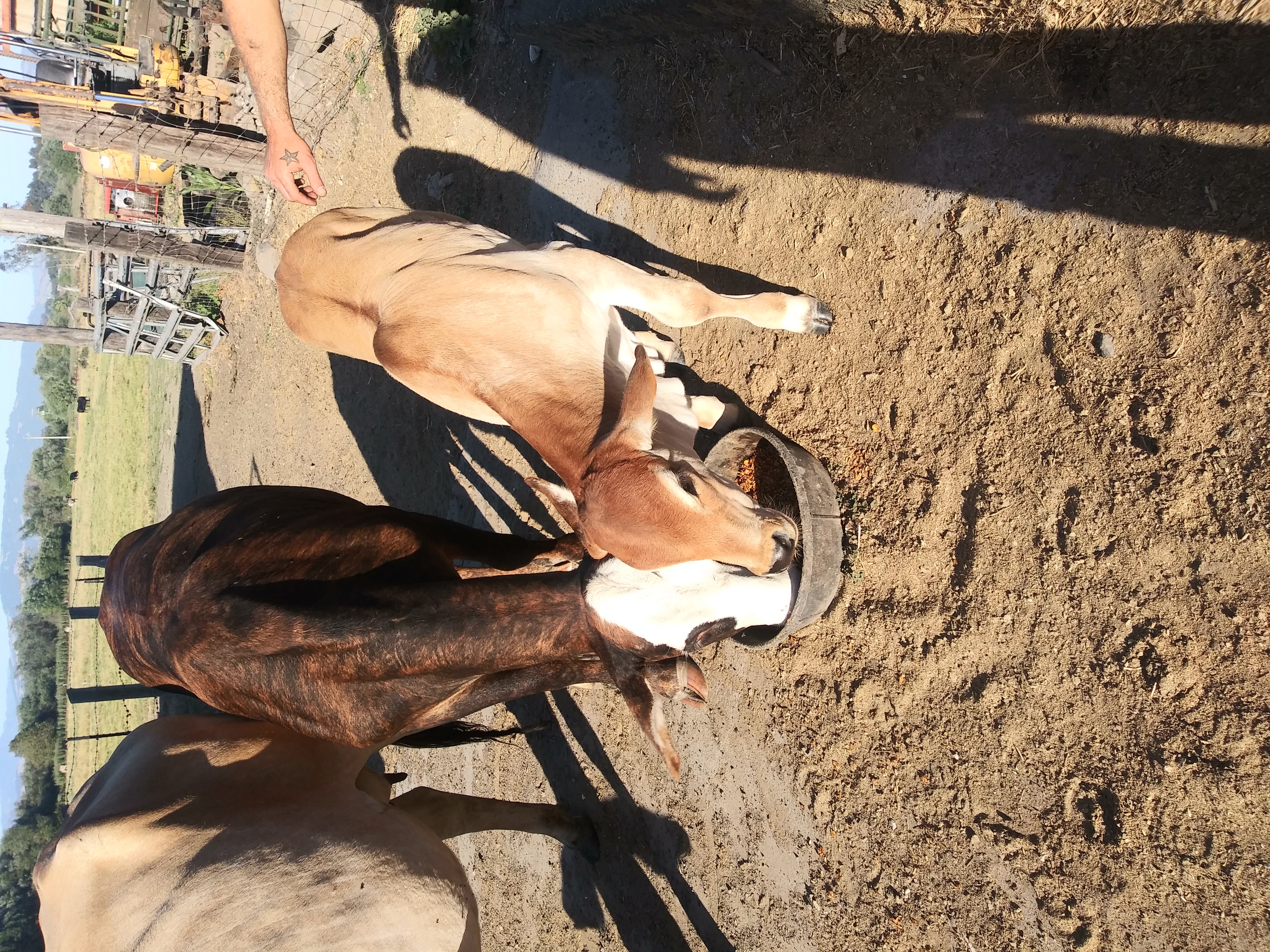
Domestic cattle belong to the genus Bos and the species taurus and indicus.
All British and European cattle breeds, such as Angus, Hereford, Holstein, Shorthorn and Simmental,
belong to the taurus species. The humped cattle of tropical countries, such as Brahman and Africander,
belong to the indicus species. They are also called Zebu or "eared" breeds.
An individual may be referred to as a bull, cow, heifer, steer or calf. These terms refer to an animal's sex,
age and reproductive status. Calves are cattle of either sex that are 1 year old or younger. Bulls are intact
male cattle of any age, while the term steer refers to castrated male cattle. A heifer is a female that has not
yet had a calf, and a cow is a female that has had at least one calf. In most species, the bull is much larger
than the cow. Breeds can be polled (genetically hornless) or horned. Both male and female wild cattle species have horns,
and the bull's horns are larger and thicker than the cow's.
Unlike humans, cattle have panoramic vision, which means they can see almost all the way around themselves without
moving their heads. Their depth perception, however, is only focused in a small forward view. This means that, while
a cow might be able to see you standing at its side, it cannot necessarily judge how close or far away you actually are.
This may explain why a cow can be startled when approached, even if you have been in its field of vision for some time.
Domestic cattle are social animals and live in groups called herds.
Information provided by Smithsonian's National Zoo