How to: Fire Sprinkler System
This page will go through all the questions we had when we started: materials, supplies, techniques we have used at the their different stages.
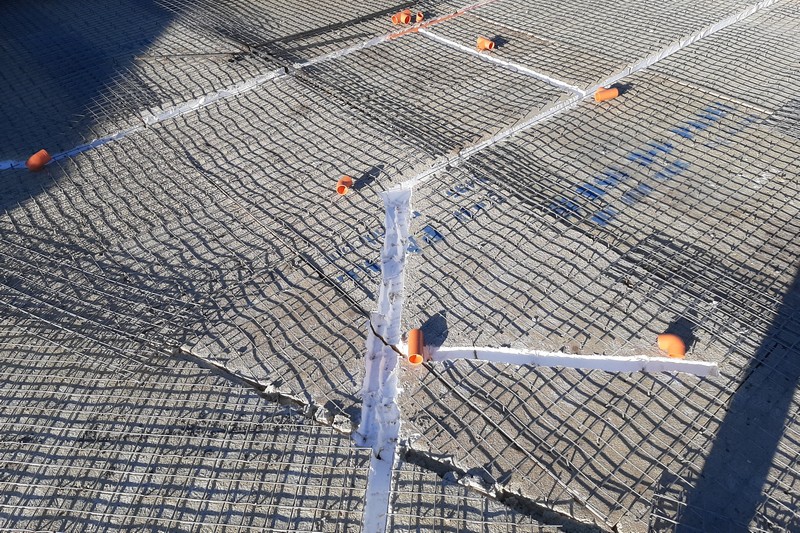
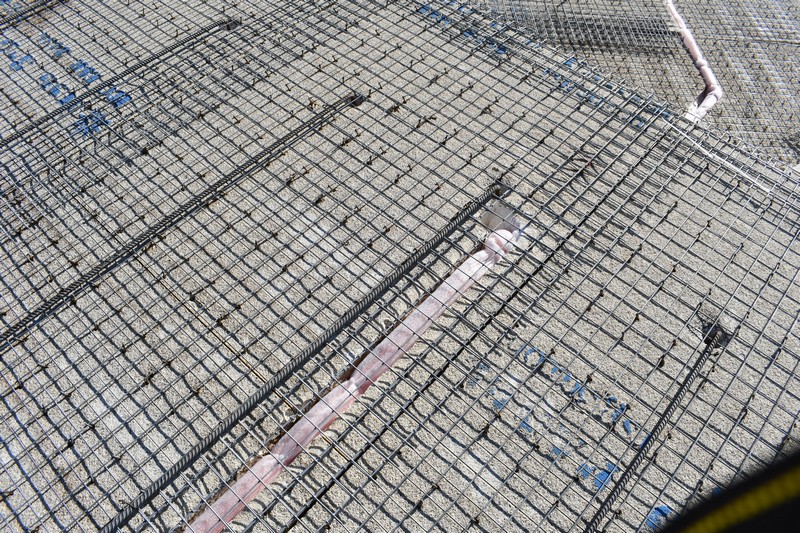
Fire Sprinkler Pipes in Roof Panels
In contrast to traditional wood houses, the fire sprinkler pipes are routed within the roof panels. JP and I are the first homeowner builders of the Sonoma County to obtain this permit on our own. We thoroughly studied the NFPA code, and JP designed the system while I drafted it with Revit software.
Fire Sprinkler Heads
The fire sprinkler heads are strategically placed around the house following NFPA code to ensure full coverage in the event of a fire.
We had two kind of he fire sprinkler heads with different installations.
In the house where we installed a fake ceiling under the concrete panels, the heads are hidden inside the ceiling and the concrete ceiling.
In the garage where we kept the concrete ceiling, the heads are visible.
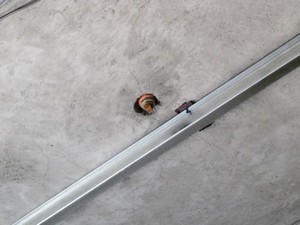
Head in concrete ceiling.
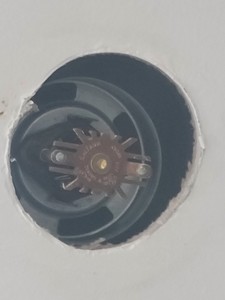
Head in sheetrock.
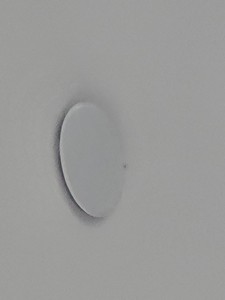
Head Hidden.
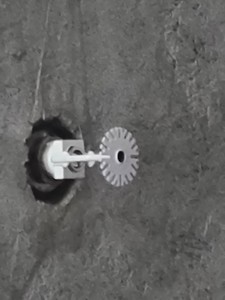
Head visible in garage.
Fire Sprinkler Tank
Because we are on the county and a well, a dedicated fire sprinkler tank was installed to ensure that the system has an adequate and independent water supply in case of emergency. This tank guarantees that the sprinklers can function without relying on the home's main water system.
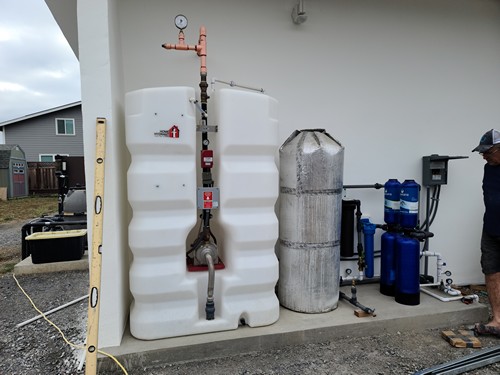
Pool Firefighter Hookup
Additionally, the pool has a firefighter hookup, allowing access to the water from the ozone-treated pool in case of a fire emergency. This ensures we have an alternative water source if the main system is not sufficient.
To insure a defense perimeter, the house is also surrended by concrete patio or mineral pathway (non burnable material).