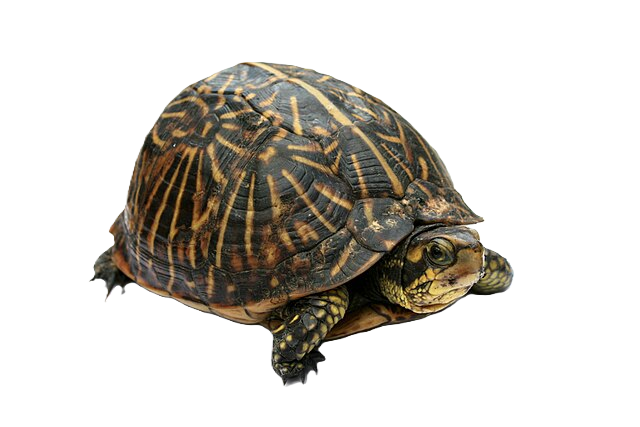
box turtle by I, Jonathan Zander, CC BY-SA 3.0, via Wikimedia Commons, image modified to remove background

The common box turtle (Terrapene carolina) gets its common name from the structure of its shell which consists of a high domed carapace (upper shell), and large, hinged plastron (lower shell) which allows the turtle to close the shell, sealing its vulnerable head and limbs safely within an impregnable box. The carapace is brown, often adorned with a variable pattern of orange or yellow lines, spots, bars or blotches. The plastron is dark brown and may be uniformly coloured, or show darker blotches or smudges. The common box turtle has a small to moderately sized head and a distinctive hooked upper jaw. The majority of adult male common box turtles have red irises, while those of the female are yellowish-brown. Males also differ from females by possessing shorter, stockier and more curved claws on their hind feet, and longer and thicker tails. There are five living subspecies of the common box turtle, each differing slightly in appearance, namely in the colour and patterning of the carapace, and the possession of either three or four toes on each hind foot.