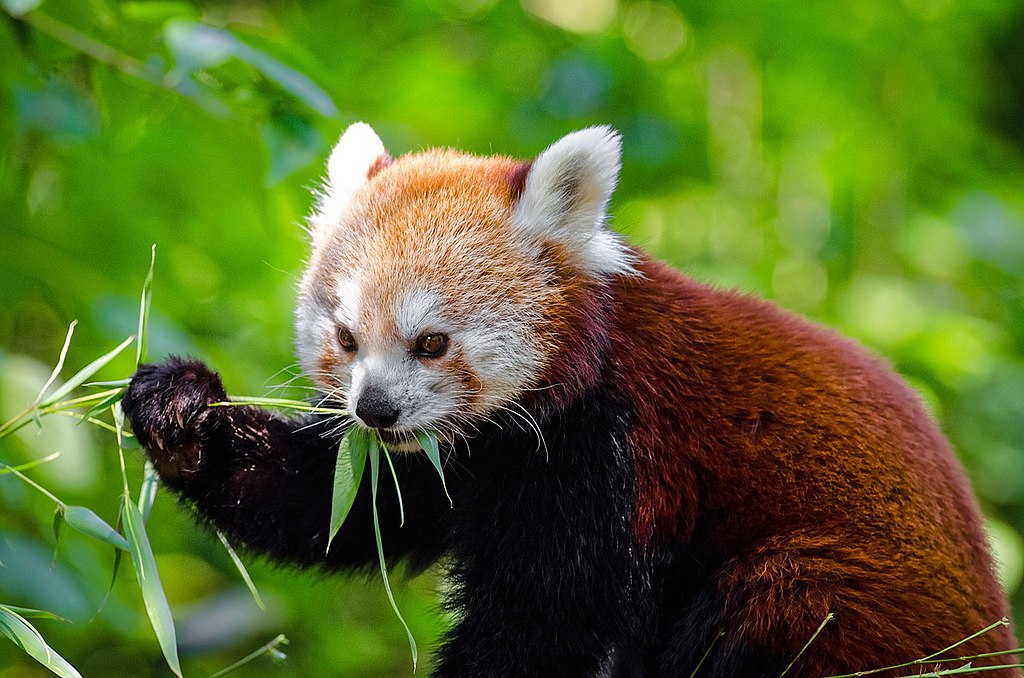
Why Red Pandas are endangered:
The red panda is primarily threatened by the destruction and fragmentation of its habitat, the causes of which include increasing human population, deforestation, the unlawful taking of non-wood forest material and disturbances by herders and livestock. Trampling by livestock inhibits bamboo growth, and clearcutting decreases the ability of some bamboo species to regenerate. The cut lumber stock in Sichuan alone reached 2,661,000 m3 (94,000,000 cu ft) in 1958–1960, and around 3,597.9 km2 (1,389.2 sq mi) of red panda habitat were logged between the mid-1970s and late 1990s. Throughout Nepal, the red panda habitat outside protected areas is negatively affected by solid waste, livestock trails and herding stations, and people collecting firewood and medicinal plants. Threats identified in Nepal's Lamjung District include grazing by livestock during seasonal transhumance, human-made forest fires and the collection of bamboo as cattle fodder in winter. Vehicular traffic is a significant barrier to red panda movement between habitat patches. Poaching is also a major threat. In Nepal, 121 red panda skins were confiscated between 2008 and 2018. Traps meant for other wildlife have been recorded killing red pandas. In Myanmar, the red panda is threatened by hunting using guns and traps; since roads to the border with China were built starting in the early 2000s, red panda skins and live animals have been traded and smuggled across the border. In southwestern China, the red panda is hunted for its fur, especially for the highly valued bushy tails, from which hats are produced. The red panda population in China has been reported to have decreased by 40 per cent over the last 50 years, and the population in western Himalayan areas are considered to be smaller. Between 2005 and 2017, 35 live and seven dead red pandas were confiscated in Sichuan, and several traders were sentenced to 3–12 years of imprisonment. A month-long survey of 65 shops in nine Chinese counties in the spring of 2017 revealed only one in Yunnan offered hats made of red panda skins, and red panda tails were offered in an online forum.