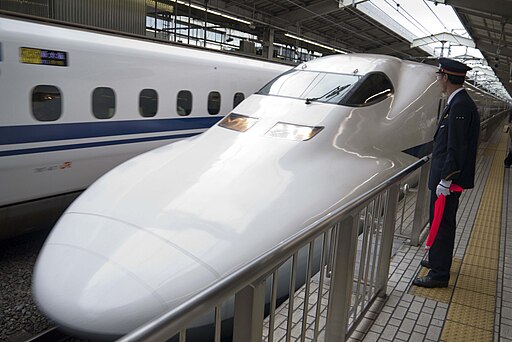
The Shinkansen, colloquially known in English as the bullet train, is a network of high-speed railway lines in Japan.
It was initially built to connect distant Japanese regions with Tokyo, the capital, to aid economic growth and development.
Beyond long-distance travel, some sections around the largest metropolitan areas are used as a commuter rail network.
[2].
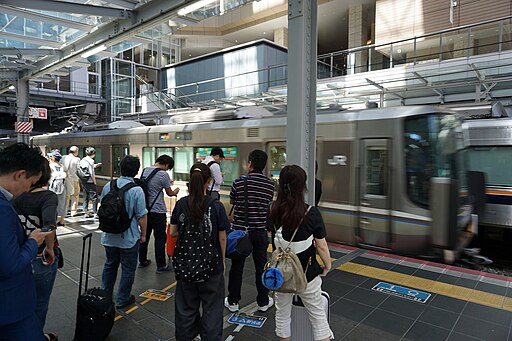
Rail is the primary mode of transport in Tokyo. Greater Tokyo has the most extensive urban railway network
and the most used in the world with 40 million passengers (transfers between networks tallied twice) in the
metro area daily, out of a metro population of 36 million. There are 882 interconnected rail stations in the
Tokyo Metropolis, 282 of which are Subway stations,with several hundred more in each of the 3 surrounding densely
populated suburban prefectures. There are 30 operators running 121 passenger rail lines, 102 serving Tokyo and 19
more serving Greater Tokyo but not Tokyo's city center itself, excluding about 12 cable cars.
[3].
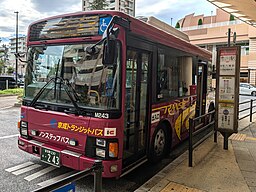
Public buses in Greater Tokyo usually serve a secondary role, feeding bus passengers to and from train stations.
Exceptions are long-distance bus services, buses in areas poorly served by rail (not many exist), and airport bus
services for people with luggage
[4].
Taxi
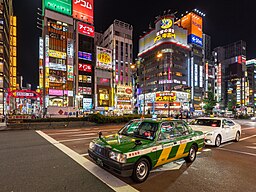
Taxis also serve a similar role to buses, supplementing the rail system,
especially after midnight when most rail lines cease to operate.
People moving around the city on business often choose taxis for convenience, as do people setting out in small groups
[4].

.jpg)

