Diet
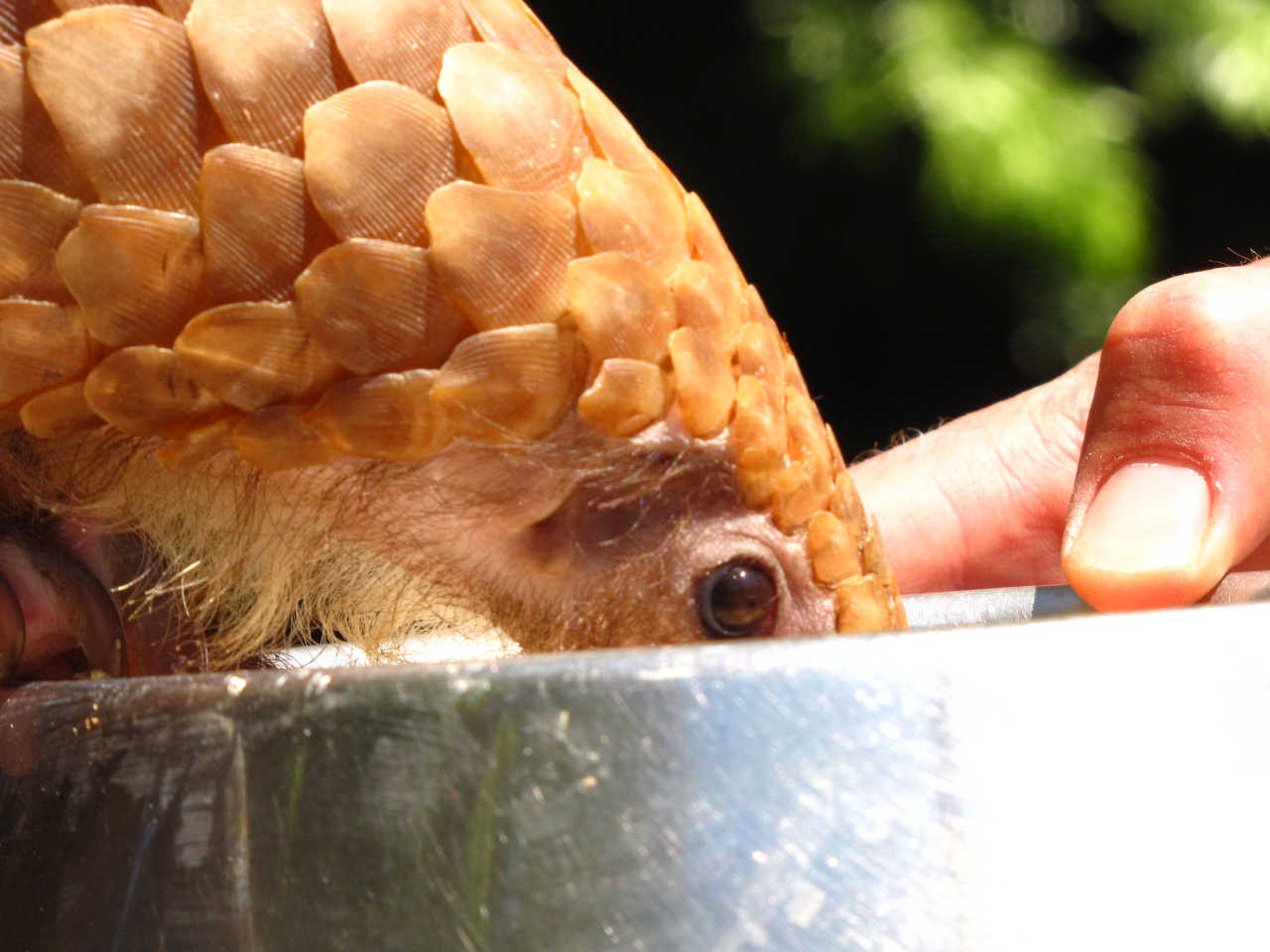
Pangolins are insectivorous. Most of their diet consists of various species of ants and termites and may be supplemented by other insects, especially larvae. They are somewhat particular and tend to consume only one or two species of insects, even when many species are available. A pangolin can consume 140 to 200 g (5 to 7 oz) of insects per day. Pangolins are an important regulator of termite populations in their natural habitats.
Pangolins have very poor vision. They also lack teeth. They rely heavily on smell and hearing, and they have other physical characteristics to help them eat ants and termites. Their skeletal structure is sturdy and they have strong front legs used for tearing into termite mounds. They use their powerful front claws to dig into trees, soil, and vegetation to find prey, then proceed to use their long tongues to probe inside the insect tunnels and to retrieve their prey.
The structure of their tongue and stomach is key to aiding pangolins in obtaining and digesting insects. Their saliva is sticky, causing ants and termites to stick to their long tongues when they are hunting through insect tunnels. Without teeth, pangolins cannot also chew; but while foraging, they ingest small stones (gastroliths), which accumulate in their stomachs to help to grind up ants. This part of their stomach is called the gizzard, and it is also covered in keratinous spines. These spines further aid in the grinding up and digestion of the pangolin's prey.
Some species, such as the tree pangolin, use their strong, prehensile tails to hang from tree branches and strip away bark from the trunk, exposing insect nests inside.