
Axolotls are fascinating creatures known for their calm demeanor and mysterious ways. Unlike many other amphibians, they spend their entire lives in water, never undergoing metamorphosis to a terrestrial form.
Their perpetual juvenile state (neoteny) makes them unique in the animal kingdom - eternally youthful both in appearance and behavior.
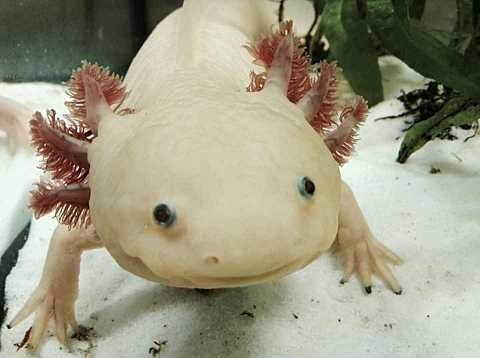
An axolotl gracefully swimming in its aquatic environment
Axolotls are primarily nocturnal creatures, becoming more active during evening hours. During the day, they often remain still or hide among plants and rocks.
These creatures are not particularly social with each other but also don't display aggressive territorial behaviors unless competing for food or during breeding season.
Axolotls are carnivorous and use a unique suction feeding technique to capture prey. When they spot potential food, they create a vacuum with their mouth that literally sucks the prey item in, along with a surprisingly large amount of water.
Axolotls move through water using a side-to-side motion of their tail, similar to the swimming pattern of fish. They can also walk along the bottom of their habitat using their four legs.
Despite their alien appearance, axolotls are remarkably docile creatures. They rarely display stress behaviors and adapt well to captivity, making them popular exotic pets.
Axolotls don't vocalize or communicate audibly with each other. Their communication is primarily chemical through pheromones, especially during breeding season. Their physical gestures are minimal, though males may fan their tails to spread pheromones when courting females.
Perhaps the most fascinating aspect of axolotl behavior is their response to injury. Unlike most animals that form scar tissue, axolotls begin a regeneration process almost immediately after injury.
This regeneration extends beyond just healing - they can regrow entire limbs, parts of vital organs, and even portions of their brain or heart. This remarkable ability doesn't seem to diminish as they age.
Check out the Homepage for general information or the Habitat page to learn about where axolotls live!