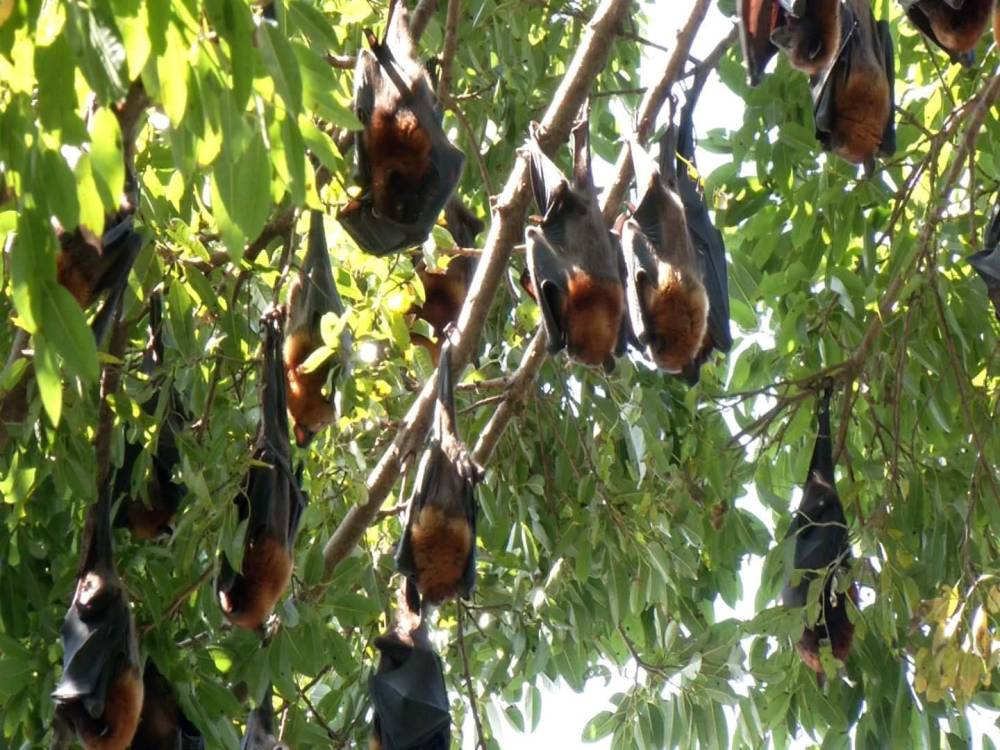
The Giant Golden-Crowned Flying Fox(Acerodon jubatus) is predominantly nocturnal, exhibiting peak activity during the nighttime while spending daylight hours resting. They prefer to roost in large, dense colonies high in the canopies of tall, mature trees where they feel safe from potential predators and environmental stressors. During daylight hours, they remain stationary, hanging upside down with their large wings wrapped around their bodies for protection and warmth.
These fruit bats are highly social animals, typically found roosting in colonies that may contain hundreds or even thousands of individuals. Their social interactions are complex and involve various behaviors such as grooming, scent-marking, and vocal communications. They produce high-pitched vocalizations to communicate within the colony, especially during periods of disturbance or when identifying individual members within the roost. Scent marking is equally important, aiding colony cohesion and territoriality.
Primarily frugivores, the Giant Golden-Crowned Flying Fox's diet consists predominantly of fruits, especially figs, which constitute their main food source. They also consume other soft fruits and nectar from flowers. Unlike many other bat species, they do not employ echolocation. Instead, these bats rely on excellent eyesight and an acute sense of smell to locate food sources. They typically forage at night, traveling several kilometers from their roosting sites to find ripe fruits.
Listen to the unique sounds of the Flying Fox.