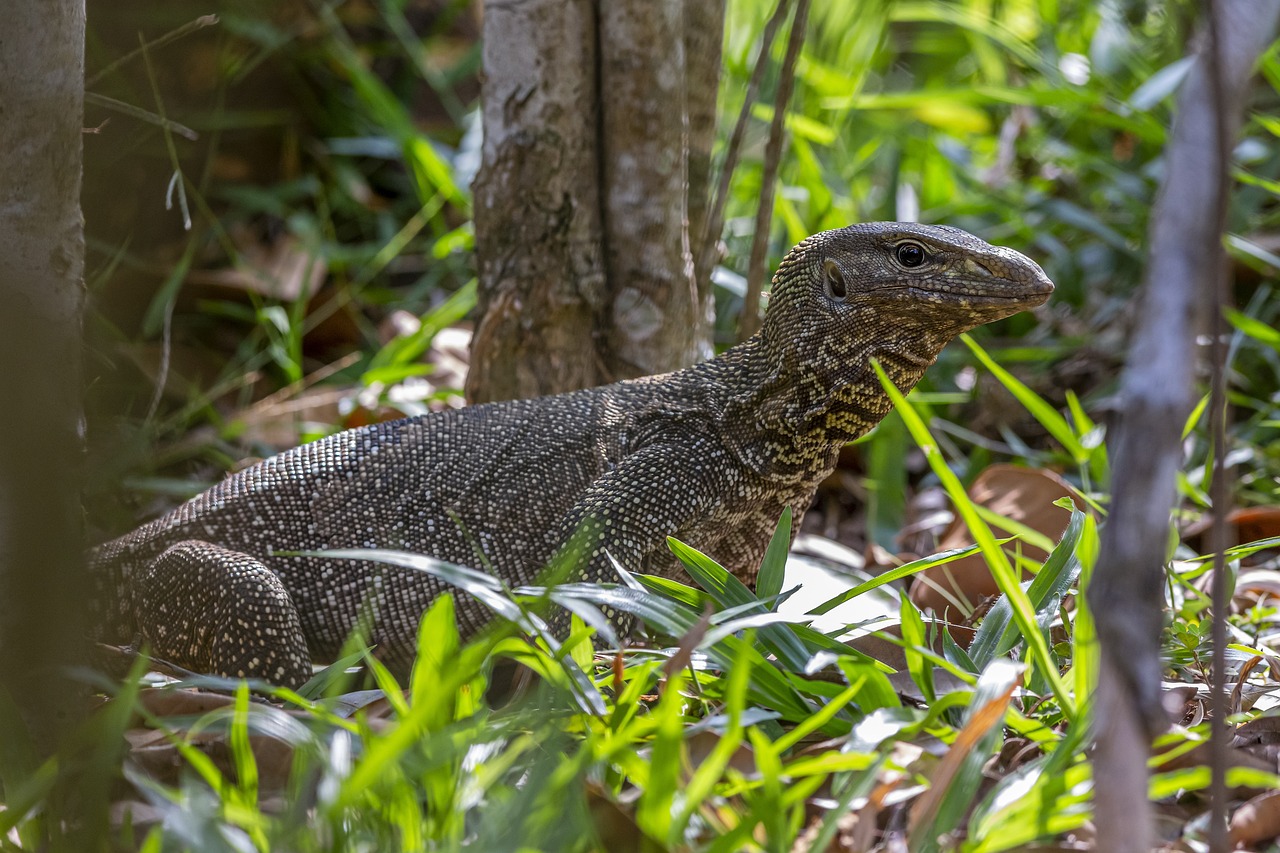
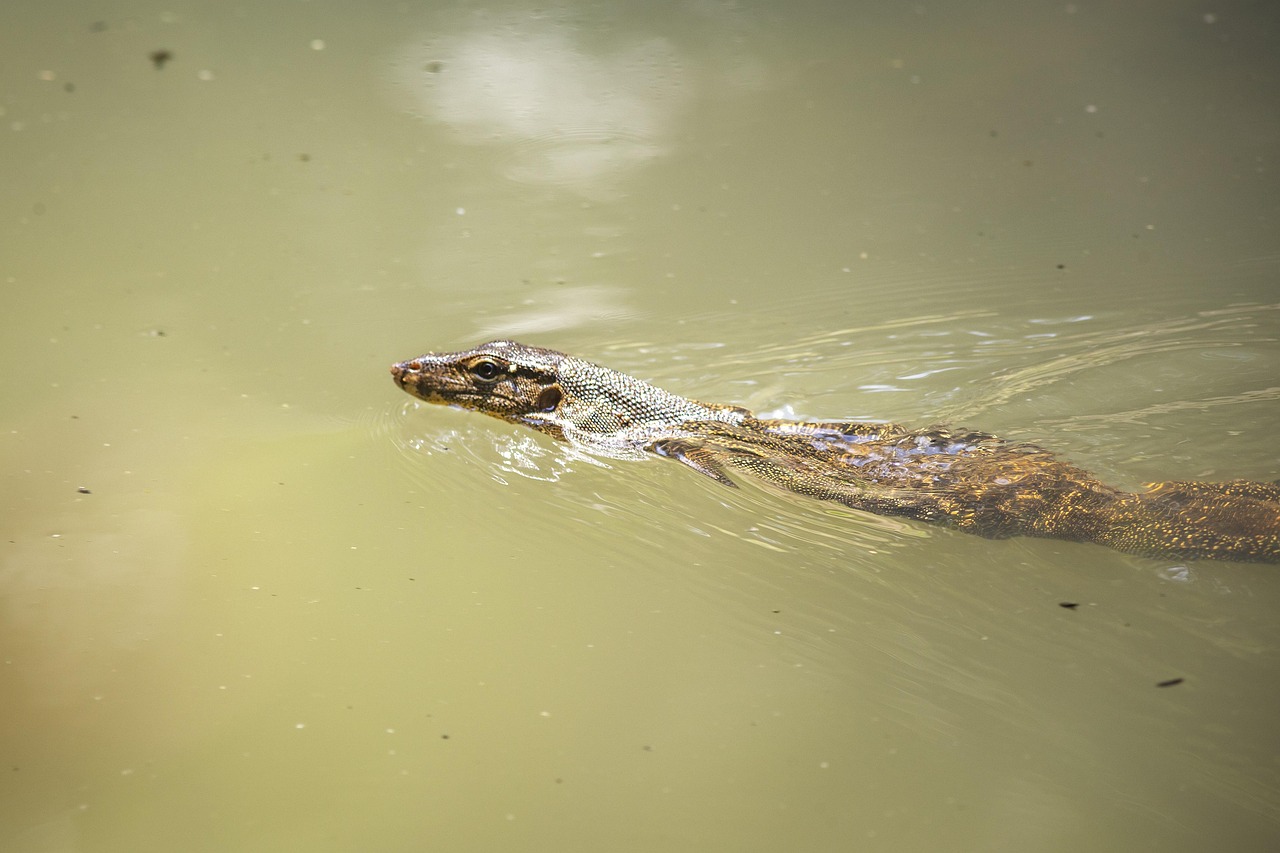
Water monitors defend themselves using their tails, claws, and jaws. They are excellent swimmers, using the raised fin on their tails to steer through water. When encountering smaller prey items, the water monitor will subdue it in its jaws and proceed to violently thrash its neck, destroying the prey's organs and spine which leaves it dead or incapacitated. The lizard will then swallow it whole. Like the Komodo dragon, the water monitor will often eat carrion, or rotten flesh. By eating this decaying flesh, the lizard provides benefits to the ecosystem by removing infectious elements, cleaning the environment. They have a keen sense of smell and can smell a carcass from far away. While adults are terrestrial, juveniles are primarily arboreal.
They are carnivores, and consume a wide range of prey. They are known to eat fish, frogs, rodents, birds, crabs, and snakes. They have also been known to eat turtles as well as young crocodiles and crocodile eggs. Water monitors have been observed eating catfish in a fashion similar to a mammalian carnivore, tearing off chunks of meat with their sharp teeth while holding it with their front legs and then separating different parts of the fish for sequential consumption. In Java, they have also been recorded entering caves at night to hunt bats that have fallen from cave's ceiling.