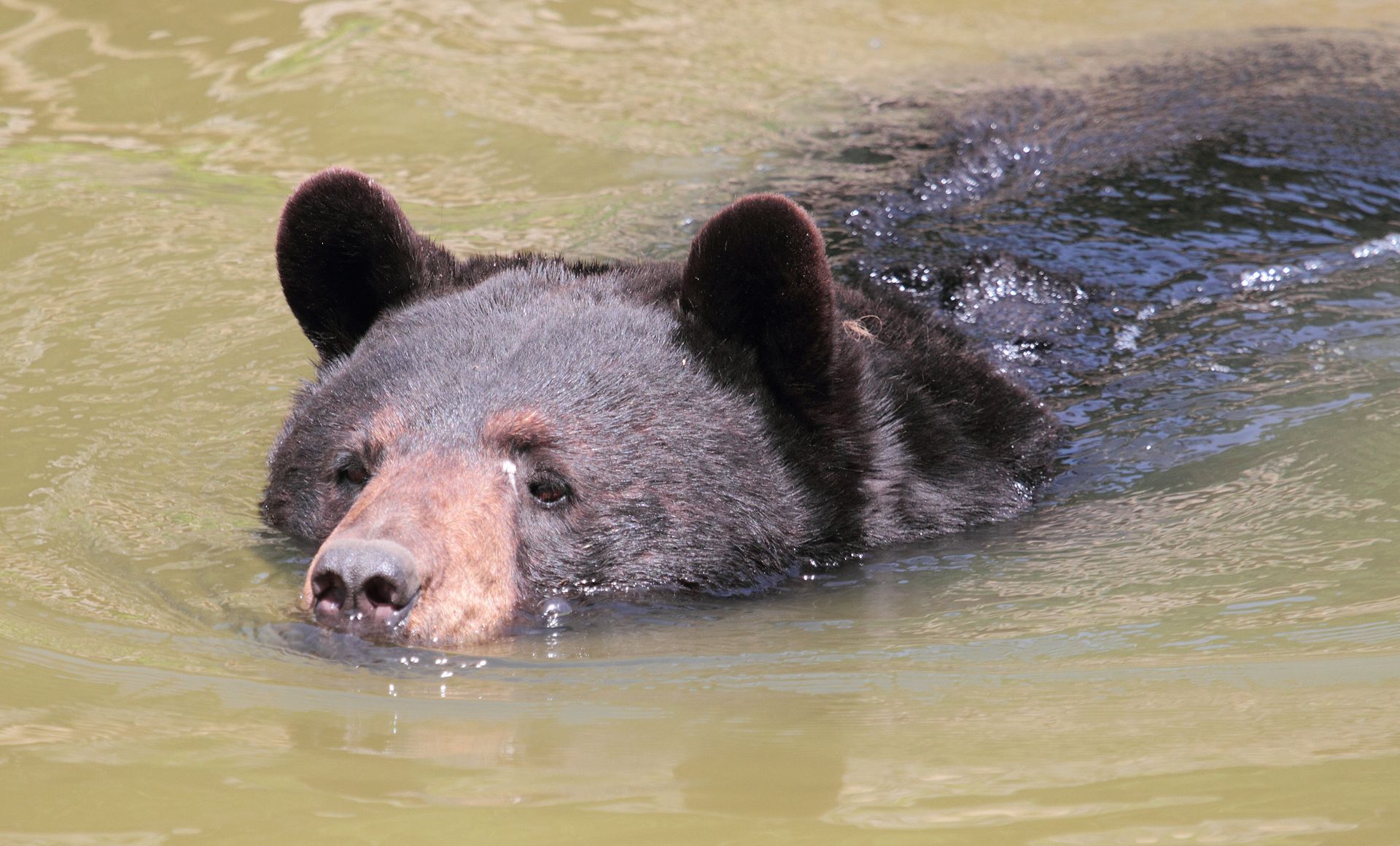
American black bears tend to be territorial and non-gregarious in nature. However, at abundant food sources (e.g. spawning salmon or garbage dumps), they may congregate and dominance hierarchies form, with the largest, most powerful males dominating the most fruitful feeding spots.[70][page needed] They mark their territories by rubbing their bodies against trees and clawing at the bark. Annual ranges held by mature male bears tend to be very large, though there is some variation. On Long Island off the coast of Washington, ranges average 5 sq mi (13 km2), whereas on the Ungava Peninsula in Canada ranges can average up to 1,000 sq mi (2,600 km2), with some male bears traveling as far as 4,349 sq mi (11,260 km2) at times of food shortages.
Bears may communicate with various vocal and non-vocal sounds. Tongue-clicking and grunting are the most common sounds and are made in cordial situations to conspecifics, offspring and occasionally humans. When at ease, they produce a loud rumbling hum. During times of fear or nervousness, bears may moan, huff or blow air. Warning sounds include jaw-clicking and lip-popping. In aggressive interactions, black bears produce guttural pulsing calls that may sound like growling. Cubs squeal, bawl or scream when anxious and make a motor-like humming sound when comfortable or nursing. American black bears often mark trees using their teeth and claws as a form of communication with other bears, a behavior common to many species of bears.
For more information, check out the link to an absolute URL going to the Wikipedia website.