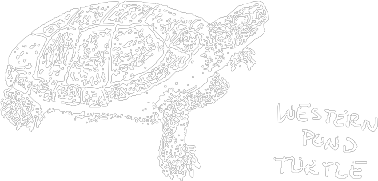
The western pond turtle occurs in both permanent and intermittent waters, including marshes, streams, rivers, ponds, and lakes. It favors habitats with large numbers of emergent logs or boulders, where individuals aggregate to bask. They also bask on top of aquatic vegetation. Consequently, this species is often overlooked in the wild. However, it is possible to observe resident turtles by moving slowly and hiding behind shrubs and trees.
A. marmorata can be encouraged to use artificial basking substrate, or rafts, which allows for easy detection of the species in complex habitats.
In addition to its aquatic habitat, terrestrial habitat is also extremely important for the western pond turtle. Since many intermittent ponds can dry up during summer and fall months along the west coast, especially during times of drought, the western pond turtle can spend upwards of 200 days out of water. Many turtles overwinter outside of the water, during which time they often create their nests for the year. Overwintering sites can sometimes be 500 meters from a main body of water.
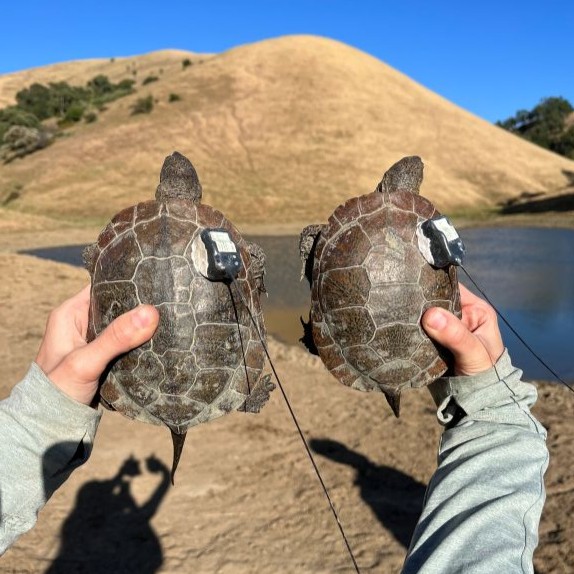
The western pond turtle is omnivorous and most of its animal diet includes insects, crayfish, and other aquatic invertebrates. Fish, tadpoles, and frogs are eaten occasionally, and carrion is eaten when available. Plant foods include filamentous algae, lily pads, tule and cattail roots. Juveniles are primarily carnivorous, and eat insects and carrion. At about age three they begin to eat plant matter.
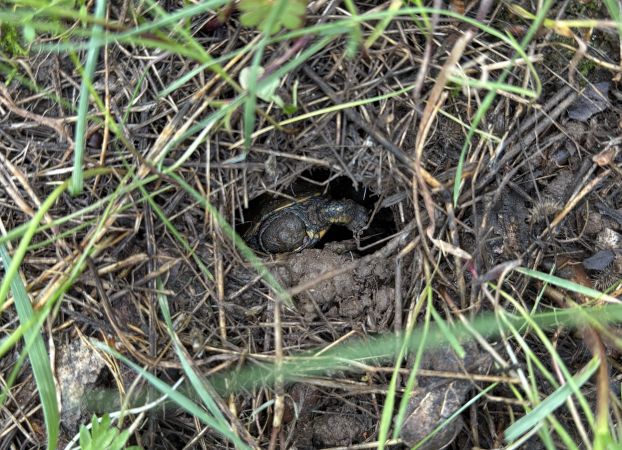
Sexually mature females of the western pond turtle produce 5-13 eggs per clutch. They deposit eggs either once or twice a year. They may travel some distance from water for egg-laying, moving as much as 0.8 km (1/2 mile) away from and up to 90 m (300 ft) above the nearest source of water, but most nests are within 90 m (300 ft) of water. The female usually leaves the water in the evening and may wander far before selecting a nest site, often in an open area of sand or hardpan that is facing southwards. The nest is flask-shaped with an opening of about 5 cm (2 in). Females spend considerable time covering up the nest with soil and adjacent low vegetation, making it difficult for a person to find unless it has been disturbed by a predator.