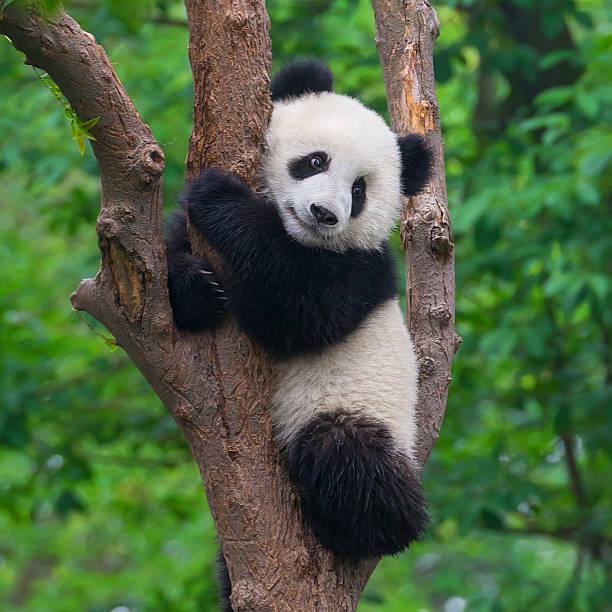
 Source: iStockphoto
Giant Pandas are solitary and peaceful animals, which will usually avoid confrontation, but if escape is impossible, they will certaintly fight back. And as cuddly as they may look, pandas can protect themselves as well as most other bears by using their physical strength, and powerful jaws and teeth.
While their famous black and white fur pattern might stand out to us, it is actually used for camouflage. The white sections help them blend into snowy surroundings during winter, and the dark black fur helps them disappear in the shade of trees in summer.
While pandas are known for their clumsy and lazy behavior often observed in captivity or during feeding, they are actually proficient tree climbers and swimmers. However, they do also spend a lot of time sitting around eating bamboo. It can take as long as 12 hours a day for a panda to eat the amount of bamboo it needs to get enough nutrients.
Because of their low energy diet, they avoid stressful situations and exertion, preferring shallow slopes and solitary living. They live solitary lives, using their sense of smell to avoid each other's territory.
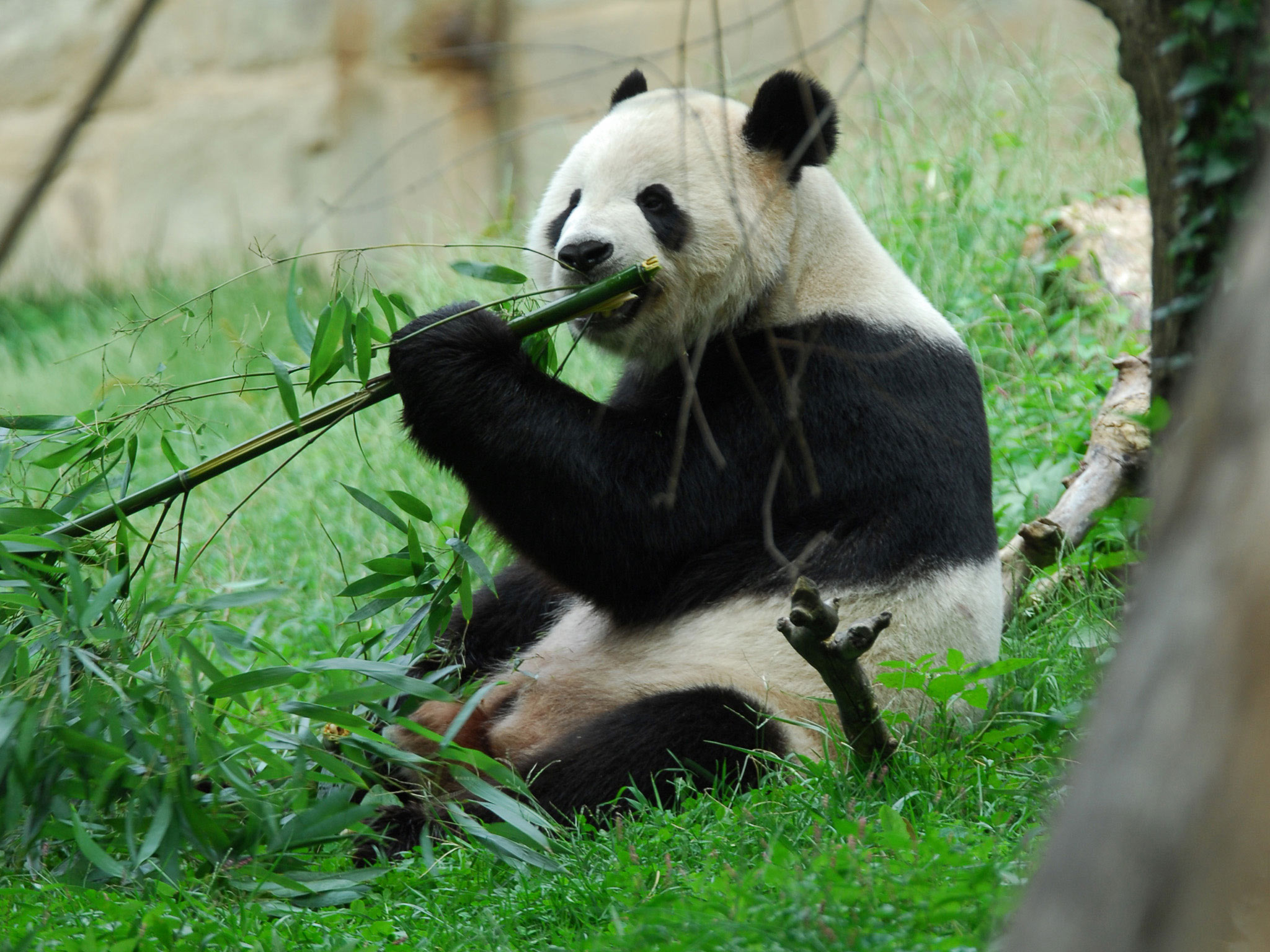 Source: Science
The giant pandas spend as long as 14 hours eating a day. In addition to eating for about half a day, the giant pandas spend the rest of their time sleeping. In the wild, the giant pandas sleep for 2 to 4 hours between its two meals, whose favorite sleeping poses include lying flat on their backs, lying on their sides, or stretching their paws and rolling themselves up into balls.
The pandas are very nimble in climbing trees and run rapidly in danger. They propose to their partners, run away from danger, and evade competitors by climbing trees. The giant pandas also walk into the valley, sneak into mountain villages or residences, play wiht round shaped utensils as toys and later abandon them in the wild.
The giant pandas have a very docile temperament in most cases, and they often lower their heads or shade their faces with front paws to conceal their true appearances when they come across a man for the first time. Seldom actively attacking men or other animals, the giant pandas always evade them when coming across them.
The giant pandas have a very docile temperament in most cases, and they often lower their heads or shade their faces with front paws to conceal their true appearances when they come across a man for the first time. Seldom actively attacking men or other animals, the giant pandas always evade them when coming across them.
However, the giant pandas consider their cubs holy and untouchable once they give birth, and they will burst into rage at such small things as their cubs being watched by visitors. The giant pandas can stretch their paws and open their mouths wide like cats to make themselves more comfortable. They can also shake water off themselves like dogs after a heavy rain.