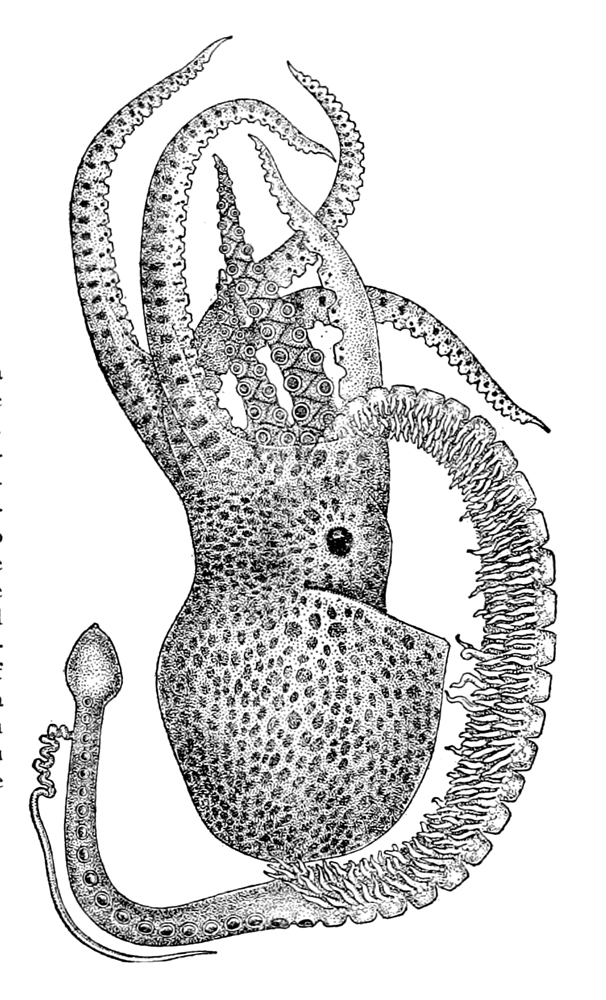
The Octopus (pl.: octopuses or octopodes) is a soft-bodied, eight-limbed mollusc of the order Octopoda (/ɒkˈtɒpədə/, ok-TOP-ə-də). The order consists of some 300 species and is grouped within the class Cephalopoda with squids, cuttlefish, and nautiloids. Like other cephalopods, an octopus is bilaterally symmetric with two eyes and a beaked mouth at the centre point of the eight limbs. The soft body can radically alter its shape, enabling octopuses to squeeze through small gaps. They trail their eight appendages behind them as they swim. The siphon is used both for respiration and for locomotion, by expelling a jet of water. Octopuses have a complex nervous system and excellent sight, and are among the most intelligent and behaviourally diverse of all invertebrates.
Octopuses have unique defense mechanisms. They include
The octopus is bilaterally symmetrical along its dorso-ventral (back to belly) axis;
the head and foot are at one end of an elongated body and function as the anterior (front) of the animal. The head includes the mouth and brain. The foot has evolved into a set of flexible, prehensile appendages, known as "arms", that surround the mouth and are attached to each other near their base by a webbed structure. The arms can be described based on side and sequence position (such as L1, R1, L2, R2) and divided into four pairs. The two rear appendages are generally used to walk on the sea floor, while the other six are used to forage for food. The bulbous and hollow mantle is fused to the back of the head and is known as the visceral hump; it contains most of the vital organs. The mantle cavity has muscular walls and contains the gills; it is connected to the exterior by a funnel or siphon. The mouth of an octopus, located underneath the arms, has a sharp hard beak.
All information for the Octopus comes from
This wikipedia page