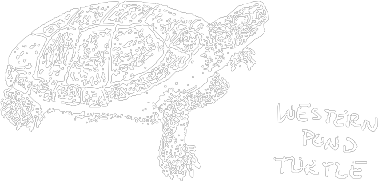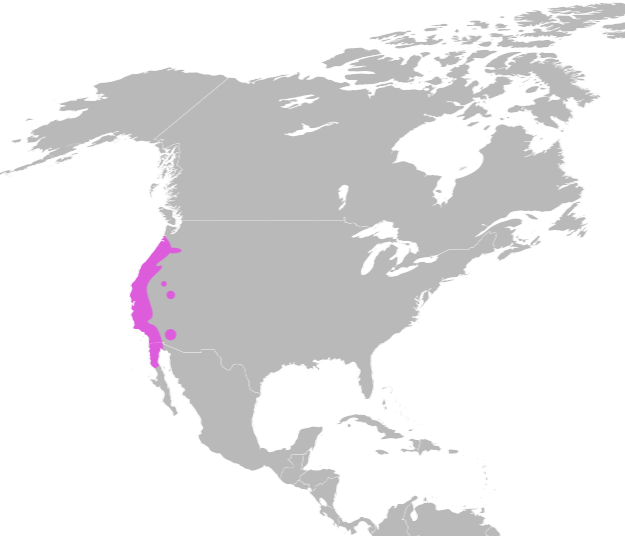
The western pond turtle originally ranged from northern Baja California, Mexico, north to the southern regions of British Columbia, Canada. It was once a large part of a major fishery on Tulare Lake, California, supplying San Francisco with a local favorite, turtle soup, as well as feed for hogs that learned to dive for it in the shallows of Hog Island, also on Tulare Lake. As of 2007, it has become rare or absent in the Puget Sound region of Washington. It has a disjunct distribution in most of the Northwest, and some isolated populations exist in southern Washington. The western pond turtle is now rare in the Willamette Valley north of Eugene, Oregon, but abundance increases south of that city where temperatures are higher. It may be locally common in some streams, rivers and ponds in southern Oregon. A few records are reported east of the Cascade Mountains, but these may have been based on introduced individuals. It ranges up to 305 m (1,001 ft) in Washington, and to about 915 m (3,002 ft) in Oregon. It also occurs in Uvas Canyon area, Santa Cruz Mountains, California, and in the North Bay, and lakes such as Fountaingrove Lake.
The western pond turtle occurs in both permanent and intermittent waters, including marshes, streams, rivers, ponds, and lakes. It favors habitats with large numbers of emergent logs or boulders, where individuals aggregate to bask. They also bask on top of aquatic vegetation.
In addition to its aquatic habitat, terrestrial habitat is also extremely important for the western pond turtle. Since many intermittent ponds can dry up during summer and fall months along the west coast, especially during times of drought, the western pond turtle can spend upwards of 200 days out of water. Many turtles overwinter outside of the water, during which time they often create their nests for the year. Overwintering sites can sometimes be 500 meters from a main body of water.