Giant pandas live in a few mountain ranges in south central China, in Sichuan, Shaanxi and Gansu provinces. They once lived in lowland areas, but farming, forest clearing and other development now restrict giant pandas to the mountains.
Giant pandas live in broadleaf and coniferous forests with a dense understory of bamboo, at elevations between 5,000 and 10,000 feet. Torrential rains or dense mist throughout the year characterizes these forests, often shrouded in heavy clouds.
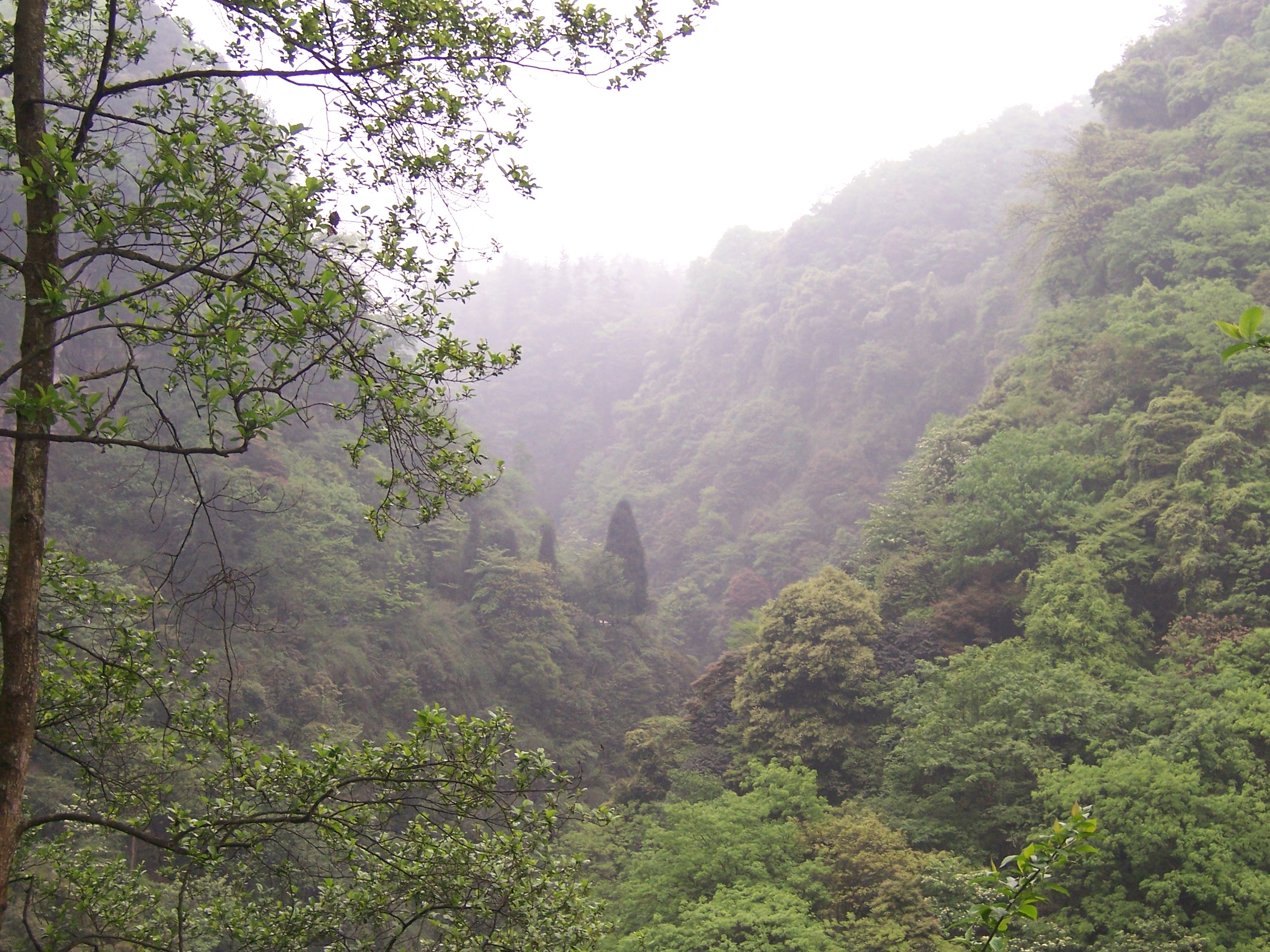
Sichuan[a] is a province in Southwestern China, occupying the Sichuan Basin and Tibetan Plateau—between the Jinsha River to the west, the Daba Mountains to the north, and the Yunnan–Guizhou Plateau to the south. Its capital city is Chengdu, and its population stands at 83 million. Sichuan neighbors Qinghai and Gansu to the north, Shaanxi and Chongqing to the east, Guizhou and Yunnan to the south, and Tibet to the west.
Giant pandas live in bamboo forests and low mountainous areas such as the Minshan Mountains in Sichuan.[63] The majority of the panda population lives in Sichuan, with their range spreading into Shaanxi and Gansu. As it is abundant where they live, pandas' diet consists of 99% bamboo, with small other plants, or small animals consisting of the other 1%. As the panda is native to China, they have become a national symbol of China.[64]
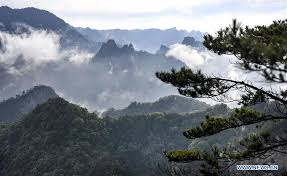
Shaanxi[a] is a province in Northwestern China. It borders the province-level divisions of Inner Mongolia to the north, Shanxi and Henan to the east, Hubei, Chongqing, and Sichuan to the south, and Gansu and Ningxia to the west. Shaanxi covers an area of over 205,000 km2 (79,000 sq mi) with about 37 million people, the 16th-largest in China. Xi'an – which includes the sites of the former capitals Fenghao and Chang'an – is the provincial capital and largest city in Northwest China[5] and also one of the oldest cities in China and the oldest of the Four Ancient Capitals, being the capital for the Western Zhou, Western Han, Jin, Sui and Tang dynasties.[6] Xianyang, which served as the capital of the Qin dynasty (221–202 BC), is just north across the Wei River. The other prefecture-level cities into which the province is divided are Ankang, Baoji, Hanzhong, Shangluo, Tongchuan, Weinan, Yan'an and Yulin.
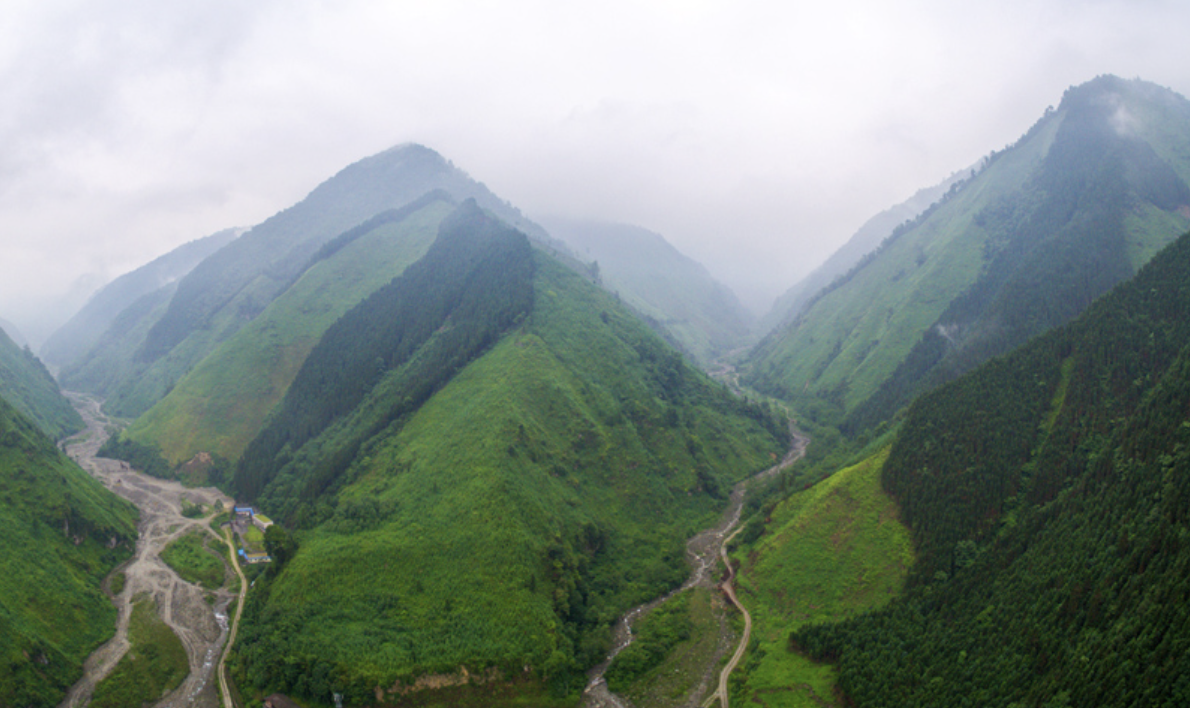
Gansu[a] is a province in Northwestern China. Its capital and largest city is Lanzhou, in the southeastern part of the province. The seventh-largest administrative district by area at 453,700 square kilometres (175,200 sq mi), Gansu lies between the Tibetan and Loess plateaus and borders Mongolia's Govi-Altai Province, Inner Mongolia and Ningxia to the north, Xinjiang and Qinghai to the west, Sichuan to the south and Shaanxi to the east. The Yellow River passes through the southern part of the province. Part of Gansu's territory is located in the Gobi Desert. The Qilian mountains are located in the south of the Province.