Image of a american crow
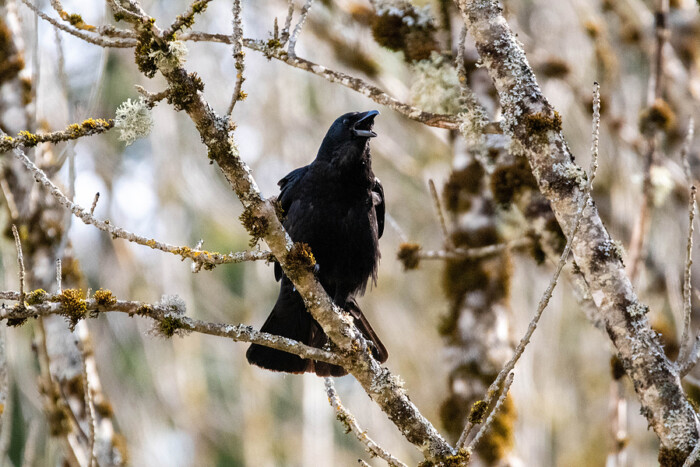
American crows prefer habitats that include open fields where food can be found, and woodlots with trees for nesting and roosting. They commonly use woodlots, wooded areas along streams and rivers, farmlands, orchards, parks, and suburban areas. American crows select trees for roosting that are larger and have more canopy than other trees in areas with high levels of light at night that are less than 2 miles from sources of food.
American Crows are highly adaptable and will live in any open place that offers a few trees to perch in and a reliable source of food. Regularly uses both natural and human created habitats, including farmland, pasture, landfills, city parks, golf courses, cemeteries, yards, vacant lots, highway turnarounds, feedlots, and the shores of rivers, streams, marshes, and beaches. Crows tend to avoid unbroken expanses of forest, but do show up at forest campgrounds and travel into forests along roads and rivers. Avoids deserts.
Crows typically hide their nests in a crotch near the trunk of a tree or on a horizontal branch, generally towards the top third or quarter of the tree. They prefer to nest in evergreens, but will nest in deciduous trees when evergreens are less available.
Both members of a breeding pair help build the nest. Young birds from the previou s year sometimes help as well. The nest is made largely of medium-sized twigs with an inner cup lined with pine needles, weeds, soft bark, or animal hair. Nest size is quite variable, typically 6-19 inches across, with an inner cup about 6-14 inches across and 4-15 inches deep.
.jpg)
Send a email to the webpage author: EMAIL