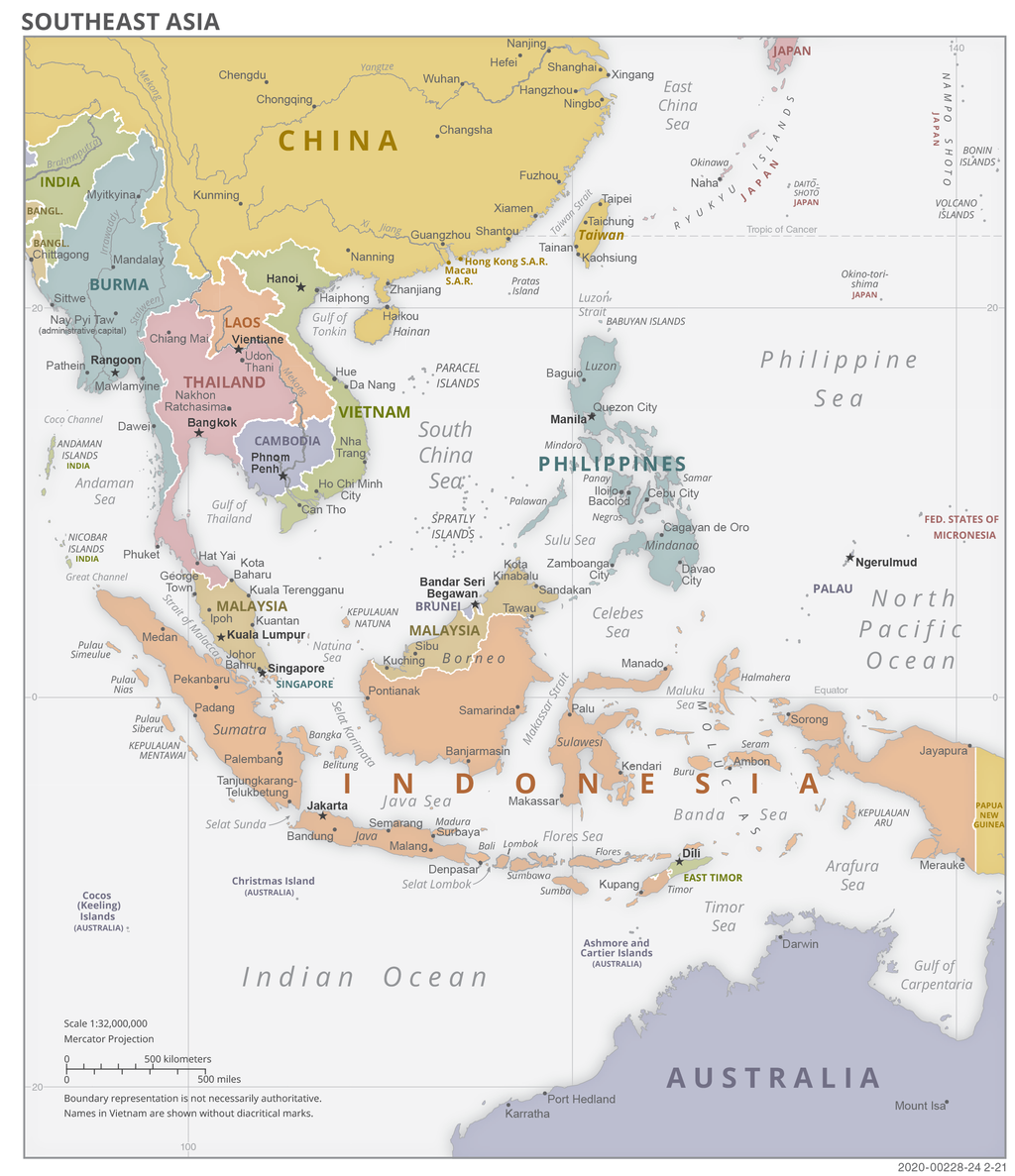
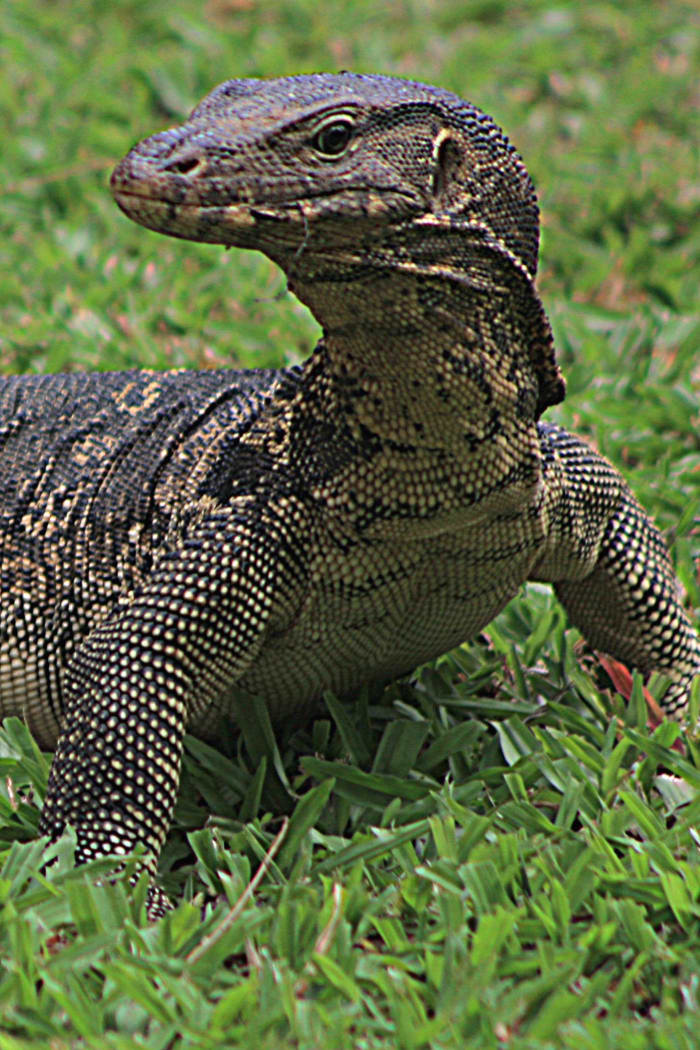
The Asian water monitor is widely distributed from India, Bangladesh, Sri Lanka, Myanmar and Thailand, Cambodia, Laos, Vietnam, the Chinese Guangxi and Hainan provinces, Malaysia, Singapore to the Sunda islands Sumatra, Java, Bali, Borneo and Sulawesi. It inhabits primarily lowland freshwater and brackish wetlands. It has been recorded up to an elevation of 1,800 m (5,900 ft).The Asian water monitor is semiaquatic and opportunistic; it inhabits a variety of natural habitats though predominantly resides in primary forests and mangrove swamps. It has been noted that it is not deterred from living in areas near human civilization. In fact, it has been known to adapt and thrive in agricultural areas as well as cities with canal systems, such as in Sri Lanka, where they are not hunted or persecuted. Habitats that are considered to be most important are mangrove vegetation, swamps, wetlands, and elevations below 1,000 m (3,300 ft). It does not thrive in habitats with extensive loss of natural vegetation and aquatic resources. A population of these monitors have become established as an invasive population in the southeastern parts of the USA.
In dominantly aquatic habitats, their semiaquatic behavior is considered to provide a measure of safety from predators. This along with their versatile diet is said to contribute to their plasticity, or ecological adaptability. When hunted by predators such as the king cobra (Ophiophagus hannah) they will climb trees using their powerful legs and claws. If this evasion is not enough to escape danger, they have also been known to jump from trees into streams for safety, a tactic similar to that of the green iguana (Iguana iguana).
For more information, click thislink to explore Southeast Asia