The Mercedes-Benz W124 is a range of executive cars made by Daimler-Benz from 1984 to 1997. The range included numerous body configurations, and though collectively referred to as the W-124, official internal chassis designations varied by body style: saloon (W 124); estate (S 124); coupé (C 124); cabriolet (A 124); limousine (V 124); rolling chassis (F 124); and long-wheelbase rolling chassis (VF 124).
The W124 was a mid-sized vehicle platform, which entered planning in the autumn of 1976 under development Hans Scherenberg. In July 1977, the W124 program officially began, with R and D commencing work under newly appointed Werner Breitschwerdt. In April 1978, decisions were made to base it on the Mercedes-Benz W201 model program. By April 1979, a package plan was completed for the program, laying out the guidelines of the project. During the winter of 1980–1981, the final exterior for the W124 program was completed, chosen as the leading proposal by design director Bruno Sacco, and approved by the board of management in early 1981. By mid-1982, the first prototypes reflective of the production design, were assembled and sent to testing. In March 1984, pilot production commenced and development of the sedan concluded with engineering sign-off.
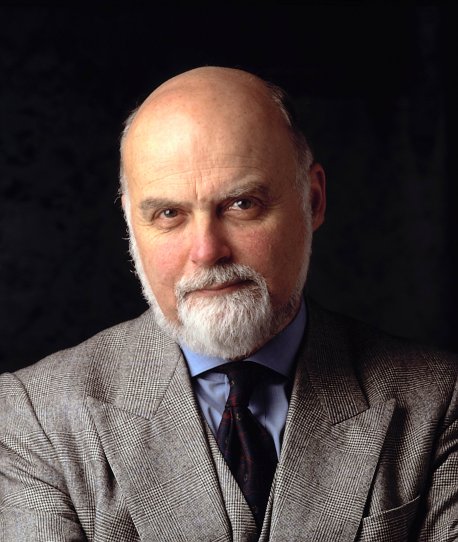
Brunno Sacco
Designer of the W126
Bruno Sacco (12 November 1933 – 19 September 2024) was an Italian automobile designer and chief engineer, who served as the head of styling at the Daimler-Benz AG, the German manufacturer of Mercedes-Benz automobiles and trucks, from 1975 to 1999. Since Bruno Sacco was hired as a Mercedes-Benz stylist in 1958, his career and contributions to their vehicles' industrial design spanned more than four decades.
Sacco rose through the corporate ranks at Daimler-Benz over the next fifteen years, becoming chief engineer in 1974, before taking over from Friedrich Geiger as head of the Daimler-Benz styling center at Sindelfingen in 1975.[1][4] For the next quarter century, until he retired in 1999, he was responsible for the design of every Mercedes road car, bus, and truck.[5] Among his numerous works are the C111 concept car, three successive generations of the S‑Class luxury saloons, (the W126, W140, and W220), the R129 SL convertible, the C-Class W202 compact executive car, the W124 and W210 versions of the E-Class sedan, the CLK and SLK sports cars, the M-Class luxury sport utility vehicle, and second generation C‑Class W203.[1] Sacco made significant contributions to the design of the Mercedes W123, the best selling Mercedes-Benz ever,[6] as well as his very last design, the R230 SL convertible (in 1997).
Sacco's favourite design, because of its significance to the company's history, is the Mercedes-Benz 190 introduced in 1982. It is also known as the W201.
W201
W126
W124
W140
W210
R129
Influence
Automotive Hall of Fame Induction Speech by Brunno Sacco.
“It sometimes happens that a project is elected on the basis of a precise, planned obsolescence of the product to ensure future demand for new models. This is particularly noticeable when new models are so different from those of the preceding generation that the latter seem antiquated and obsolete. This method is termed “styling,” a term that arouses a certain aversion among our designers and has never been utilized at Daimler-Benz Our models have stylistic similitudes (horizontal homogeneity) and follow an evolutionary line constant with the models of the previous generation (vertical affinity). This makes it possible to recognize immediately any new creation from Mercedes-Benz.”
“Experience has taught us that forms that are too trendy and flamboyant are consumed more rapidly than those that purposely avoid special effects. Of course every from tends to exhaust itself aesthetically sooner or later. Design can help accelerate this process. By artfully programming product obsolescence, in fact, it is possible to ensure a frequent demand for new models over a long period. I object to this system of product manipulation. I therefore believe that since this tactic is not in the Mercedes style, nor should it ever be, each model has a certain potential to later became a classic.”
“How do we conceive our company’s design today in the context of our history and current technical demands and possibilities? We follow three basic principles:
A Mercedes must always be recognizable as a Mercedes
For customers it must symbolize the values associated with it, which the customer expects
Its design must express the maximum innovation compatible with the tradition of our Company”
500E - Spotlight
The Mercedes-Benz 500 E (1990–1993; 1993–1995 sold as E 500; type W124.036) is a high-performance version of the W124 sold by Mercedes-Benz from 1990 to 1995.
The 500 E was created in close cooperation with Porsche. With its engineering department being fully occupied with the development of the new S-Class, Mercedes-Benz commissioned Porsche in 1989 to redesign the W124 chassis along with the necessary changes to the suspension system and drivetrain as to accommodate the wider 5-litre M119 V8. A problem was discovered on the W124 assembly line in Sindelfingen: the redesigned front wings were too wide to fit through certain stations along the assembly line. Rather than do the expensive physical changes, Mercedes-Benz organised the new assembly line at Porsche‘s manufacturing plants specifically for 500 E. This arrangement had a strong benefit for Porsche during its financial crisis brought on from the crippling metalworker strikes and costly engineering and development work on 959