Social Structure
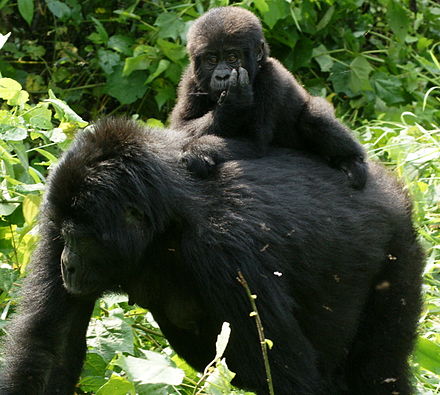
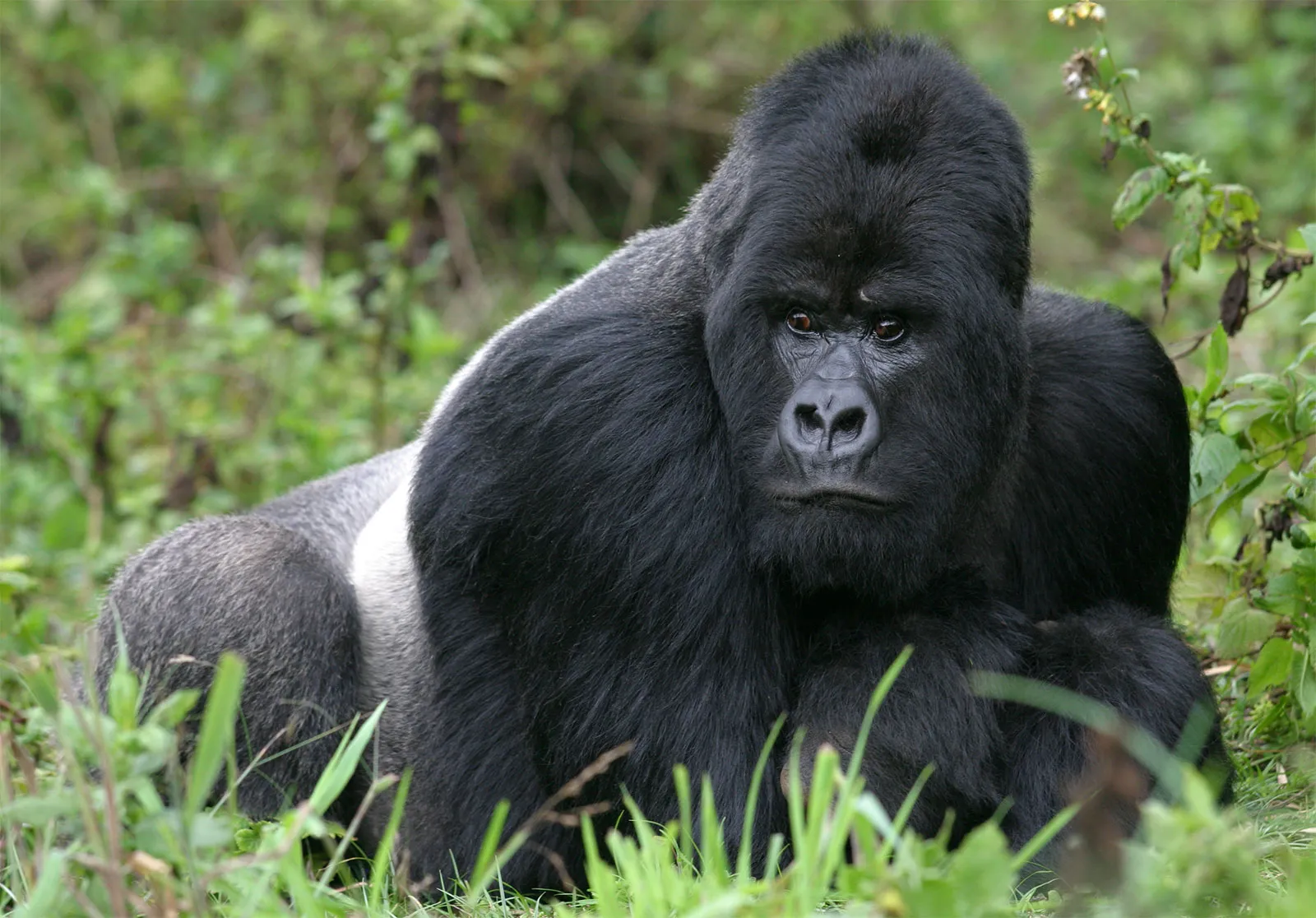
Gorillas live in groups called troops. Troops tend to be made of one adult male or silverback, with a harem of multiple adult females and their offspring.[57][58][59] However, multiple-male troops also exist.[58] A silverback is typically more than 12 years of age, and is named for the distinctive patch of silver hair on his back, which comes with maturity. Silverbacks have large canine teeth that also come with maturity. Both males and females tend to emigrate from their natal groups. For mountain gorillas, females disperse from their natal troops more than males.[57][60] Mountain gorillas and western lowland gorillas also commonly transfer to second new groups.[57]
Communication
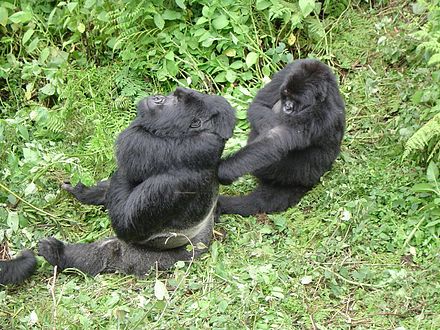
Twenty-five distinct vocalisations are recognised, many of which are used primarily for group communication within dense vegetation. Sounds classified as grunts and barks are heard most frequently while traveling, and indicate the whereabouts of individual group members.[74] They may also be used during social interactions when discipline is required. Screams and roars signal alarm or warning, and are produced most often by silverbacks. Deep, rumbling belches suggest contentment and are heard frequently during feeding and resting periods. They are the most common form of intragroup communication.[66]