African Wild Donkey Home Habitat Behavior
Taken from Wikipedia
Habitat
Introduction
African wild asses are well suited to life in a desert or semidesert environment.[5] They have tough digestive systems, which can break down desert vegetation and extract moisture from food efficiently. They can also go without water for a fairly long time. Their large ears give them an excellent sense of hearing and help in cooling.[citation needed] Because of the sparse vegetation in their environment wild asses live somewhat separated from each other (except for mothers and young), unlike the tightly grouped herds of wild horses.[1] They have very loud voices, which can be heard for over 3 km (1.9 mi), which helps them to keep in contact with other asses over the wide spaces of the desert.
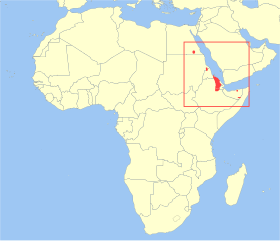
IUCN Red List of Threatened Species, species assessors and the authors of the spatial data., CC BY-SA 3.0, via Wikimedia Commons

Diet
The African wild asses' diet consists of grasses, bark, and leaves. Despite being primarily adapted for living in an arid climate, they are dependent on water, and when not receiving the needed moisture from vegetation, they must drink at least once every three days. However, they can survive on a surprisingly small amount of liquid, and have been reported to drink salty or brackish water.
Conservation Status
Though the species itself is under no threat of extinction, due to abundant domestic stock (donkeys and burros), the two extant wild subspecies are both listed as critically endangered. African wild asses have been captured for domestication for centuries and this, along with interbreeding between wild and domestic animals, has caused a distinct decline in population numbers. There are now only a few hundred individuals left in the wild.[4] These animals are also hunted for food and for traditional medicine in both Ethiopia and Somalia.[1] Competition with domestic livestock for grazing, and restricted access to water supplies caused by agricultural developments, pose further threats to the survival of this species.[1] The African wild ass is legally protected in the countries where it is currently found, although these measures often prove difficult to enforce. A protected population of the Somali wild ass exists in the Yotvata Hai-Bar Nature Reserve in Israel, to the north of Eilat. This reserve was established in 1968 with the view to bolster populations of endangered desert species. Populations of horses and asses are fairly resilient and, if the species is properly protected, it may well recover from its current low.
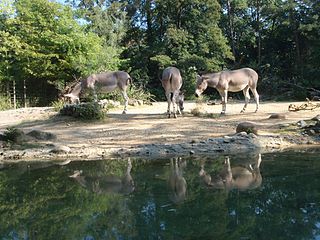
Lucasuvu, Public domain, via Wikimedia Commons

This site was programmed by Liam
Contact developer