Habitat - Grassland
Taken from Wikipedia
Click here to jump to biodiversity.
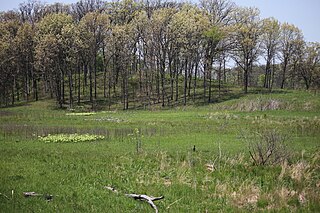
cassi saari, CC BY-SA 4.0, via Wikimedia Commons

A grassland is an area where the vegetation is dominated by grasses (Poaceae). However, sedge (Cyperaceae) and rush (Juncaceae) can also be found along with variable proportions of legumes, such as clover, and other herbs. Grasslands occur naturally on all continents except Antarctica and are found in most ecoregions of the Earth. Furthermore, grasslands are one of the largest biomes on Earth and dominate the landscape worldwide.[1] There are different types of grasslands: natural grasslands, semi-natural grasslands,[2] and agricultural grasslands.[1] They cover 31–69% of the Earth's land area.[3][4]
Biodiversity
Grasslands dominated by unsown wild-plant communities ("unimproved grasslands") can be called either natural or "semi-natural" habitat. Although their plant communities are natural, their maintenance depends upon anthropogenic activities such as grazing and cutting regimes. The semi-natural grasslands contain many species of wild plants, including grasses, sedges, rushes, and herbs; 25 plant-species per 100 square centimeters can be found.[9] A European record that was found on a meadow in Estonia described 76 species of plants in one square meter.[9] Chalk downlands in England can support over 40 species per square meter.
In many parts of the world, few examples have escaped agricultural improvement (fertilizing, weed killing, plowing, or re-seeding). For example, original North American prairie grasslands or lowland wildflower meadows in the UK are now rare and their associated wild flora equally threatened. Associated with the wild-plant diversity of the "unimproved" grasslands is usually a rich invertebrate fauna; there are also many species of birds that are grassland "specialists", such as the snipe and the little bustard.[14] Owing to semi-natural grasslands being referred to as one of the most-species rich ecosystems in the world and essential habitat for many specialists, also including pollinators,[8] there are many approaches to conservation activities lately.
This site was programmed by Liam