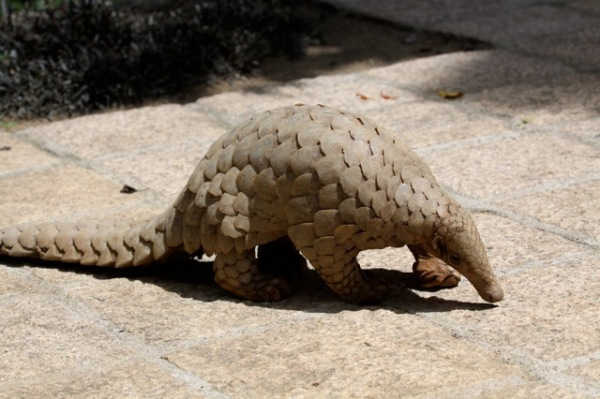
The Indian pangolin has been recorded in various forest types, including Sri Lankan rainforest and plains to middle hill levels. It inhabits grasslands and secondary forests, and is well adapted to dry areas and desert regions, but prefers more barren, hilly regions. In Sri Lanka, it was sighted at an elevation of 1,100 m (3,600 ft), and in the Nilgiri mountains at 2,300 m (7,500 ft). It prefers soft and semi-sandy soil conditions suitable for digging burrows.
Wikipedia contributors. (2025, January 28). Indian pangolin. In Wikipedia, The Free Encyclopedia. Retrieved 19:31, February 10, 2025, from https://en.wikipedia.org/w/index.php?title=Indian_pangolin&oldid=1272316414
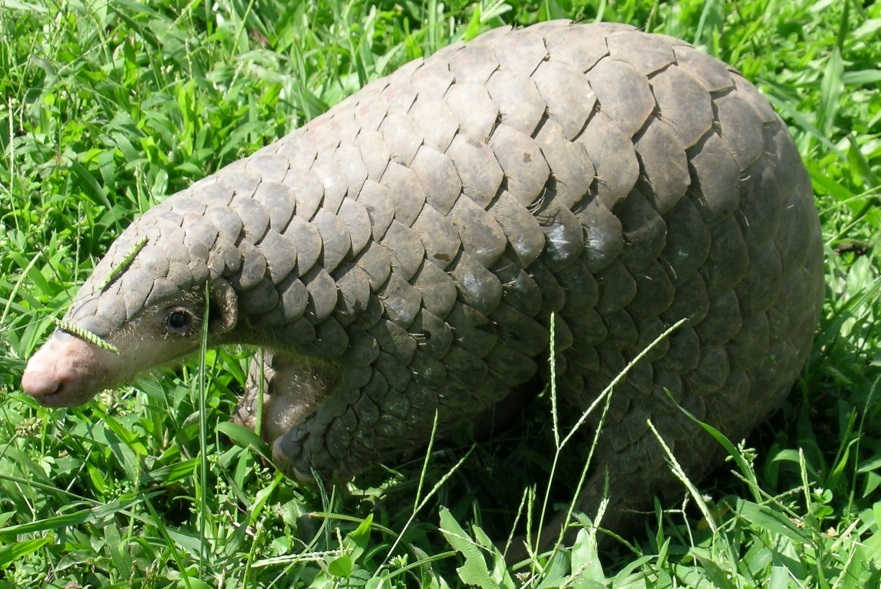
The Chinese pangolin is native to southern Nepal, northeast India, Bhutan, Bangladesh, Myanmar, northern Indochina, southern China including the island of Hainan and most of Taiwan. It has been recorded up to an elevation of 3,000 m (9,800 ft). It formerly ranged throughout provinces south of the Yangtze River, as well as north of the Yangtze River in southern Sichuan, northeast Chongqing, northwest Hubei and southwest Henan Provinces. Currently, confirmed populations in mainland China are known in Yunnan, Hainan, Guangxi, Guangdong, Hunan, Chongqing, Fujian, Jiangxi, Zhejiang and Anhui provinces. It inhabits primary and secondary tropical forests, bamboo forests, limestone forests, broadleaf forests, coniferous forests, agricultural fields and grasslands.
Wikipedia contributors. (2025, January 16). Chinese pangolin. In Wikipedia, The Free Encyclopedia. Retrieved 23:09, February 10, 2025, from https://en.wikipedia.org/w/index.php?title=Chinese_pangolin&oldid=1269790143
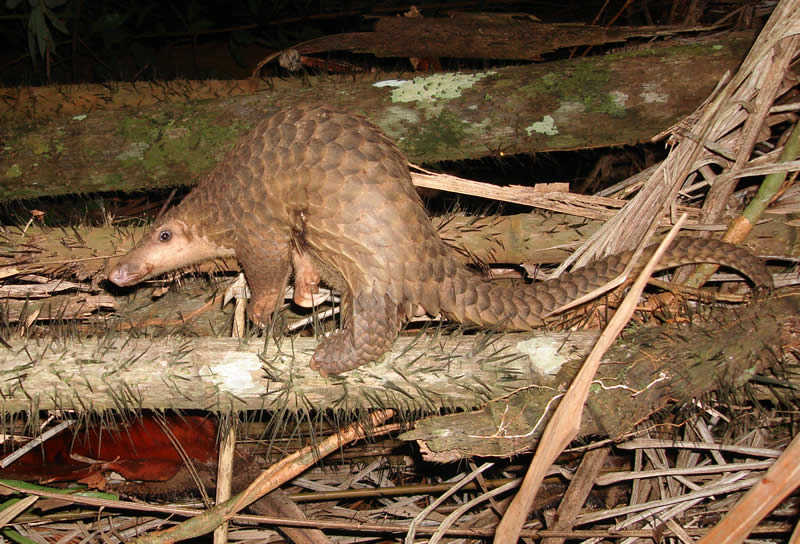
The Sunda Pangolin is native to Southeast Asia, including Myanmar, Thailand, Cambodia, Laos, Malaysia, Singapore, Vietnam, and the islands of Borneo, Java, Sumatra and the Lesser Sunda Islands. It prefers forested primary, secondary and scrub forest habitats, but also lives in rubber and palm oil plantations. It is largely arboreal.
Wikipedia contributors. (2025, January 17). Sunda pangolin. In Wikipedia, The Free Encyclopedia. Retrieved 23:30, February 10, 2025, from https://en.wikipedia.org/w/index.php?title=Sunda_pangolin&oldid=1270055499
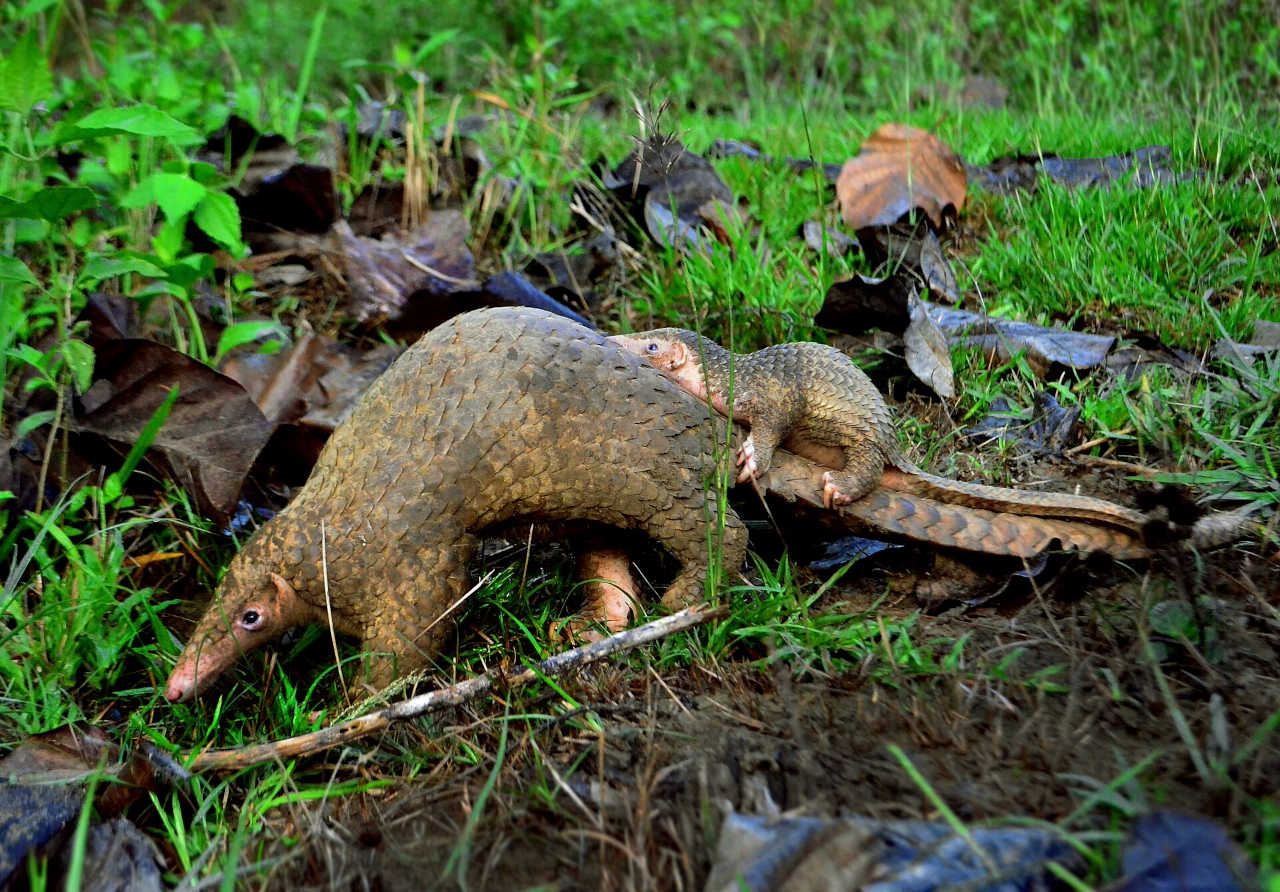
The Philippine Pangolin is endemic to the Palawan province of the Philippines. Its habitat includes primary and secondary forests, as well as surrounding grasslands.
Wikipedia contributors. (2025, January 26). Philippine pangolin. In Wikipedia, The Free Encyclopedia. Retrieved 23:37, February 10, 2025, from https://en.wikipedia.org/w/index.php?title=Philippine_pangolin&oldid=1271867428
Return to top of page --- Return to front page --- Return to prev