Description
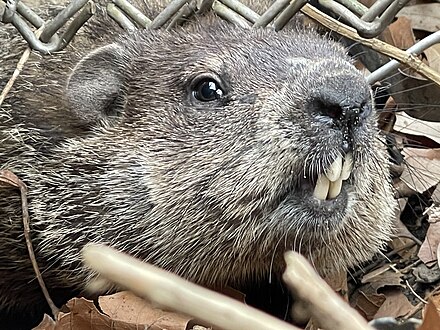
The groundhog is the largest sciurid in its geographical range, excluding its presence in British Columbia where its range may be comparable
to that of its somewhat larger cousin, the hoary marmot. Adults may measure from 41.8 to 68.5 cm in total length, including
a tail of 9.5 to 18.7 cm (3 to 7 in). Weights of adult groundhogs typically fall between 2 and 6.3 kg (4 lb 7 oz and 13 lb 14 oz).
Diet
- Wild Grasses
- Berries
- Bark
- Leaves
- Agricultural Crops
Burrows
Groundhogs are excellent burrowers, using burrows for sleeping, rearing young, and hibernating. Groundhog burrows usually have two to five
entrances, providing groundhogs their primary means of escape from predators. The volume of earth removed from groundhog burrows in one study
averaged 6 cubic feet (0.17 m3) per den. The longest burrow measured 24 feet (7.3 m) in addition to two short side galleries. Habitat.
Hibernation
Groundhogs are one of the few species that enter into true hibernation, and often build a separate "winter burrow" for this purpose. This burrow is usually
in a wooded or brushy area and is dug below the frost line and remains at a stable temperature well above freezing during the winter months. In most areas,
groundhogs hibernate from October to March or April, but in more temperate areas, they may hibernate as little as three months.