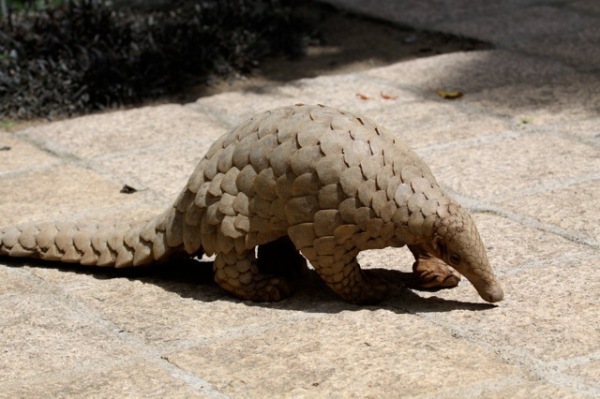
Pangolins can be broken down into three genus: The Manis of Asia and the Phataginus and Smutsia of Afrika.
The Indian pangolin has been recorded in various forest types, including Sri Lankan rainforest and plains to middle hill levels. It inhabits grasslands and secondary forests, and is well adapted to dry areas and desert regions, but prefers more barren, hilly regions. In Sri Lanka, it was sighted at an elevation of 1,100 m (3,600 ft), and in the Nilgiri mountains at 2,300 m (7,500 ft). It prefers soft and semi-sandy soil conditions suitable for digging burrows.
Wikipedia contributors. (2025, January 28). Indian pangolin. In Wikipedia, The Free Encyclopedia. Retrieved 19:31, February 10, 2025, from https://en.wikipedia.org/w/index.php?title=Indian_pangolin&oldid=1272316414
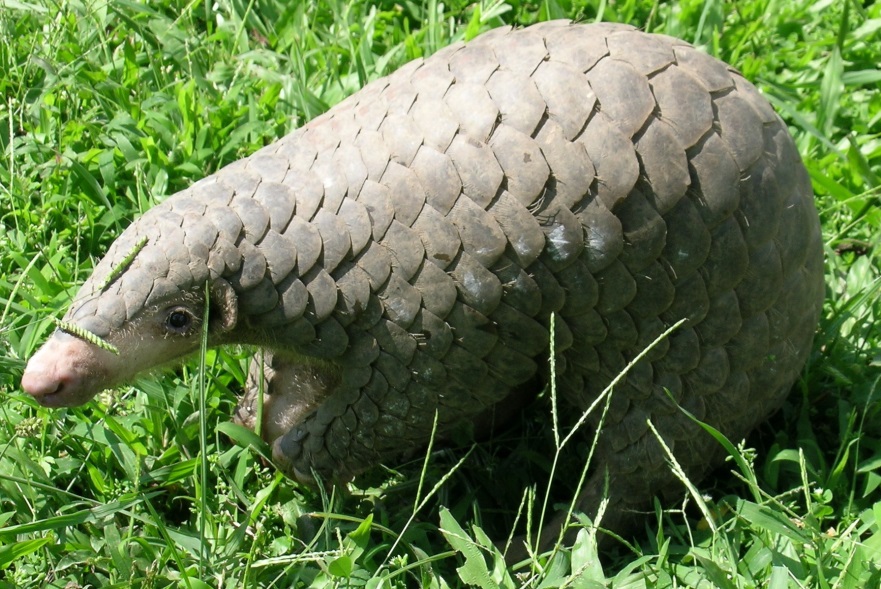
The Chinese pangolin is native to southern Nepal, northeast India, Bhutan, Bangladesh, Myanmar, northern Indochina, southern China including the island of Hainan and most of Taiwan. It has been recorded up to an elevation of 3,000 m (9,800 ft). It formerly ranged throughout provinces south of the Yangtze River, as well as north of the Yangtze River in southern Sichuan, northeast Chongqing, northwest Hubei and southwest Henan Provinces. Currently, confirmed populations in mainland China are known in Yunnan, Hainan, Guangxi, Guangdong, Hunan, Chongqing, Fujian, Jiangxi, Zhejiang and Anhui provinces. It inhabits primary and secondary tropical forests, bamboo forests, limestone forests, broadleaf forests, coniferous forests, agricultural fields and grasslands.
Wikipedia contributors. (2025, January 16). Chinese pangolin. In Wikipedia, The Free Encyclopedia. Retrieved 23:09, February 10, 2025, from https://en.wikipedia.org/w/index.php?title=Chinese_pangolin&oldid=1269790143
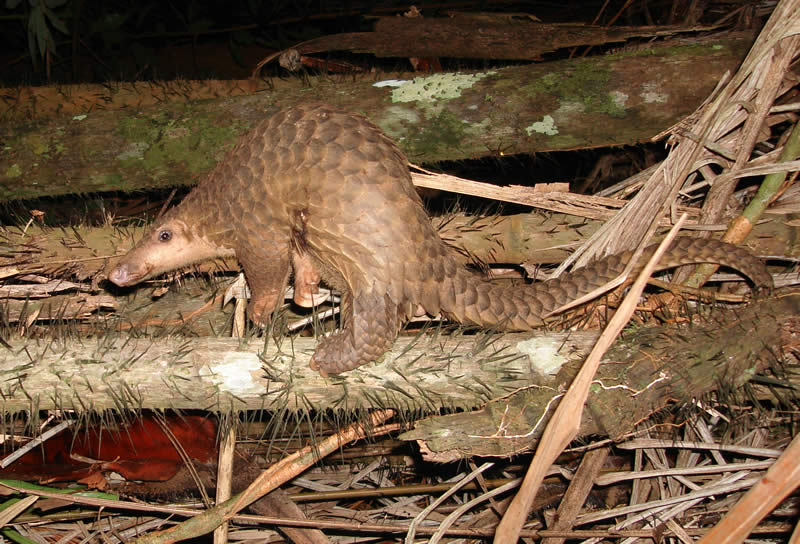
The Sunda Pangolin is native to Southeast Asia, including Myanmar, Thailand, Cambodia, Laos, Malaysia, Singapore, Vietnam, and the islands of Borneo, Java, Sumatra and the Lesser Sunda Islands. It prefers forested primary, secondary and scrub forest habitats, but also lives in rubber and palm oil plantations. It is largely arboreal.
Wikipedia contributors. (2025, January 17). Sunda pangolin. In Wikipedia, The Free Encyclopedia. Retrieved 23:30, February 10, 2025, from https://en.wikipedia.org/w/index.php?title=Sunda_pangolin&oldid=1270055499
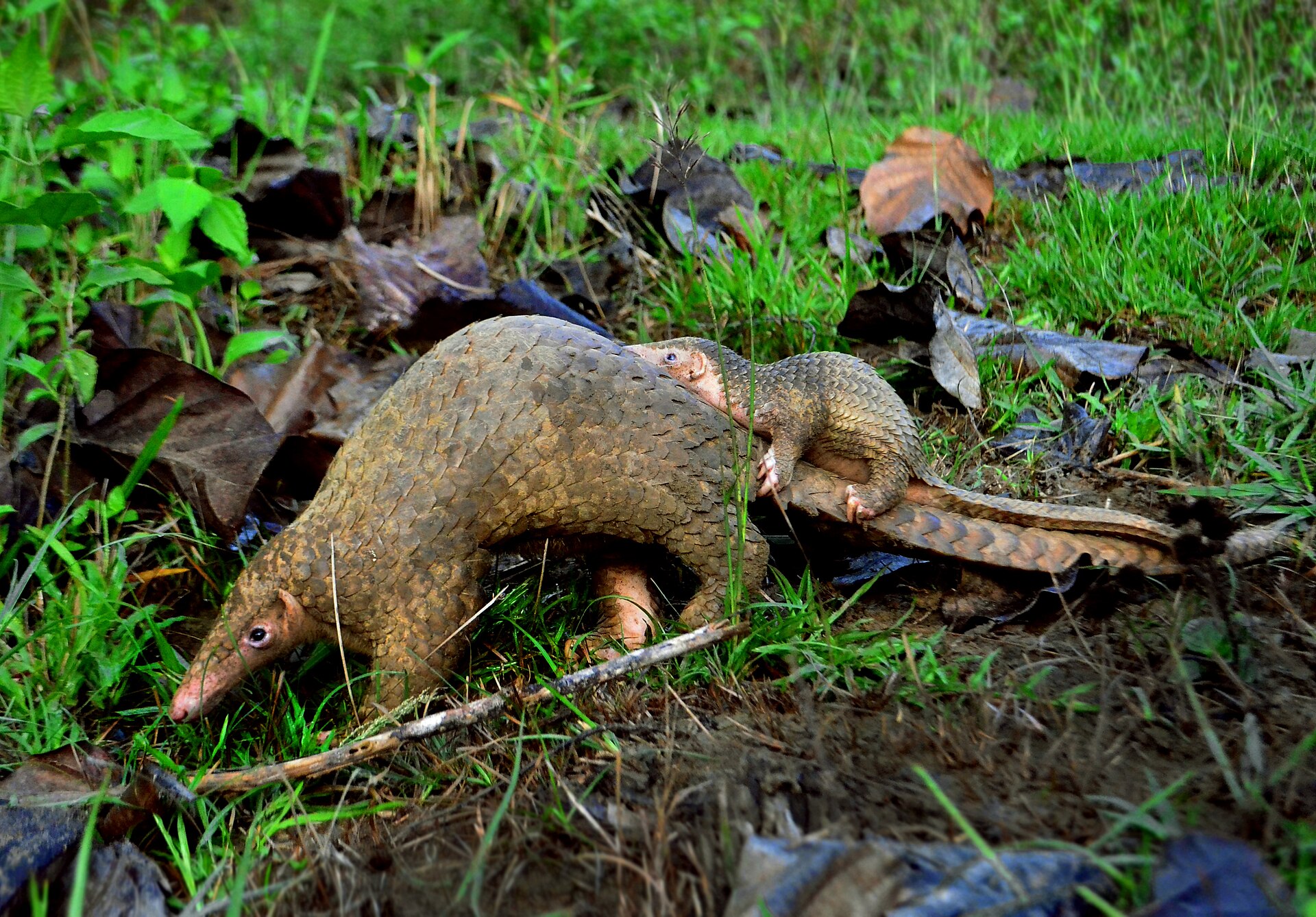
The Philippine Pangolin is endemic to the Palawan province of the Philippines. Its habitat includes primary and secondary forests, as well as surrounding grasslands.
Wikipedia contributors. (2025, January 26). Philippine pangolin. In Wikipedia, The Free Encyclopedia. Retrieved 23:37, February 10, 2025, from https://en.wikipedia.org/w/index.php?title=Philippine_pangolin&oldid=1271867428
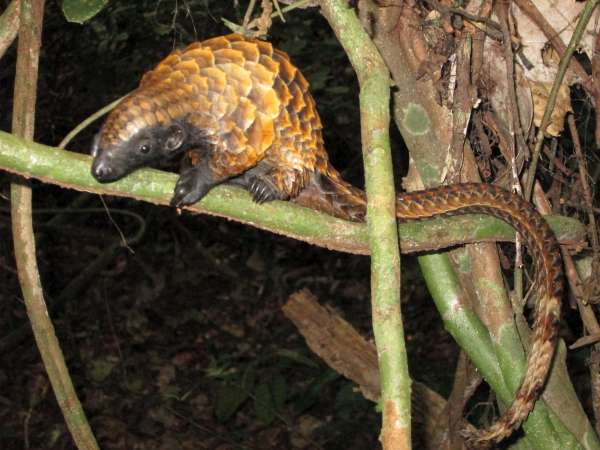
Native to parts of western and central Africa, the Long-Tailed Pangolin has been found as far west and north as Senegal, across the continent to Uganda, and south into Angola. They are found in areas such as the Congo Basin and Guinean forests. A distinct gap in populations has been observed starting in southwest Ghana, with no record of individuals found through to western Nigeria.
Long-tailed pangolins are found in moist, tropical riverine and swamp forest environments, but have been observed in altered forests (Bush), and agricultural areas of former lowland rain forests. They are almost exclusively arboreal, spending the majority of their time in the canopy region. They prefer to live in the interior part of the forests, avoiding the outermost edges. They are capable swimmers, and are usually found near water.
Wikipedia contributors. (2025, February 8). Long-tailed pangolin. In Wikipedia, The Free Encyclopedia. Retrieved 23:43, February 10, 2025, from https://en.wikipedia.org/w/index.php?title=Long-tailed_pangolin&oldid=1274664851
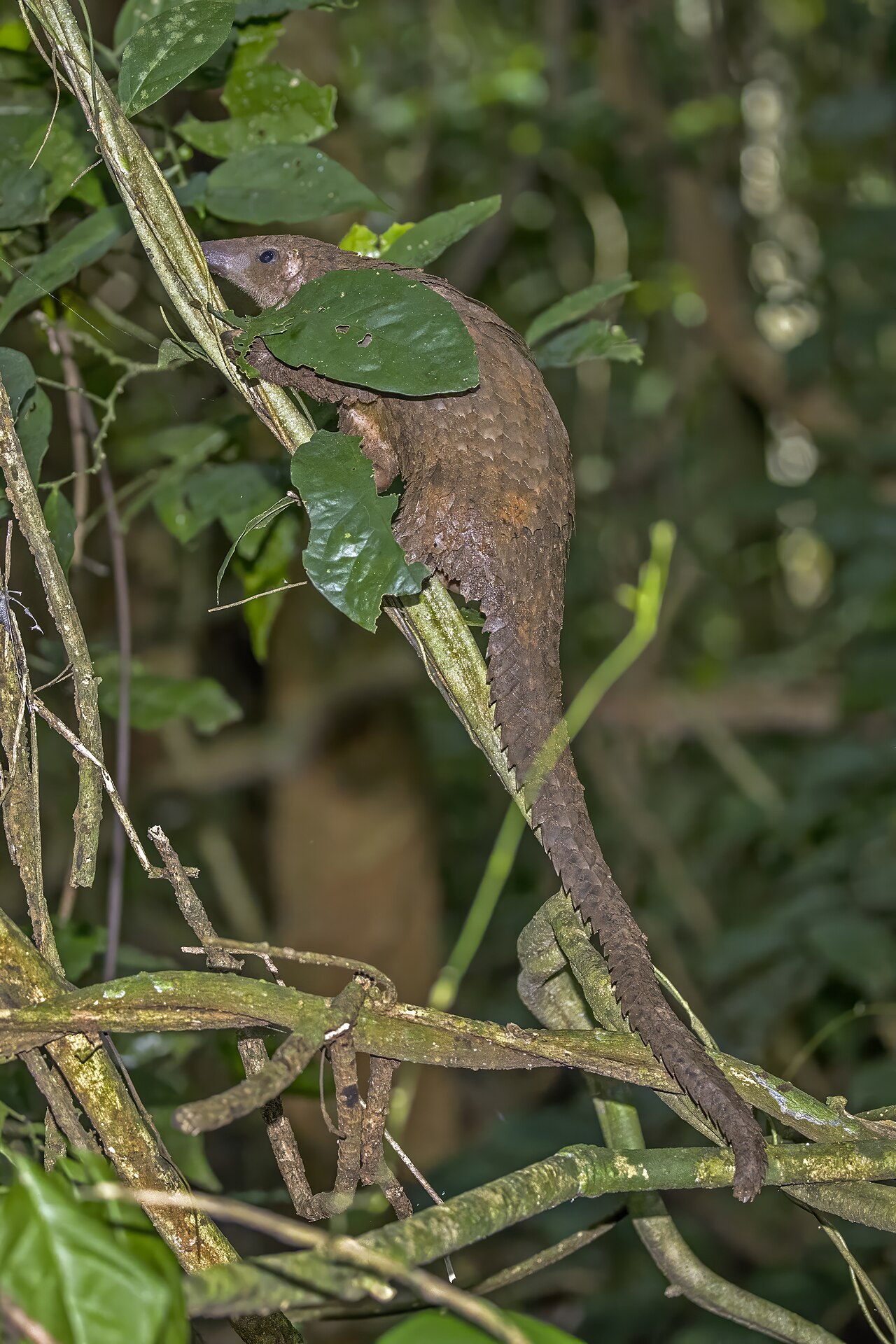
The tree pangolin ranges from Guinea through Sierra Leone and much of West Africa to Central Africa as far east as extreme southwestern Kenya and northwestern Tanzania. To the south, it extends to northern Angola and northwestern Zambia. It has been found on the Atlantic island of Bioko, but no records confirm a presence in Senegal, Gambia, or Guinea-Bissau.
The tree pangolin is semiarboreal and generally nocturnal. It is found in lowland tropical moist forests (both primary and secondary), as well as savanna/forest mosaics. It probably adapts to some degree to habitat modification, such as commercial plantations, as it favours cultivated and fallow land where it is not aggressively hunted (e.g., abandoned or little-used oil palm trees in secondary growth).
Wikipedia contributors. (2025, January 23). Tree pangolin. In Wikipedia, The Free Encyclopedia. Retrieved 23:48, February 10, 2025, from https://en.wikipedia.org/w/index.php?title=Tree_pangolin&oldid=1271258504
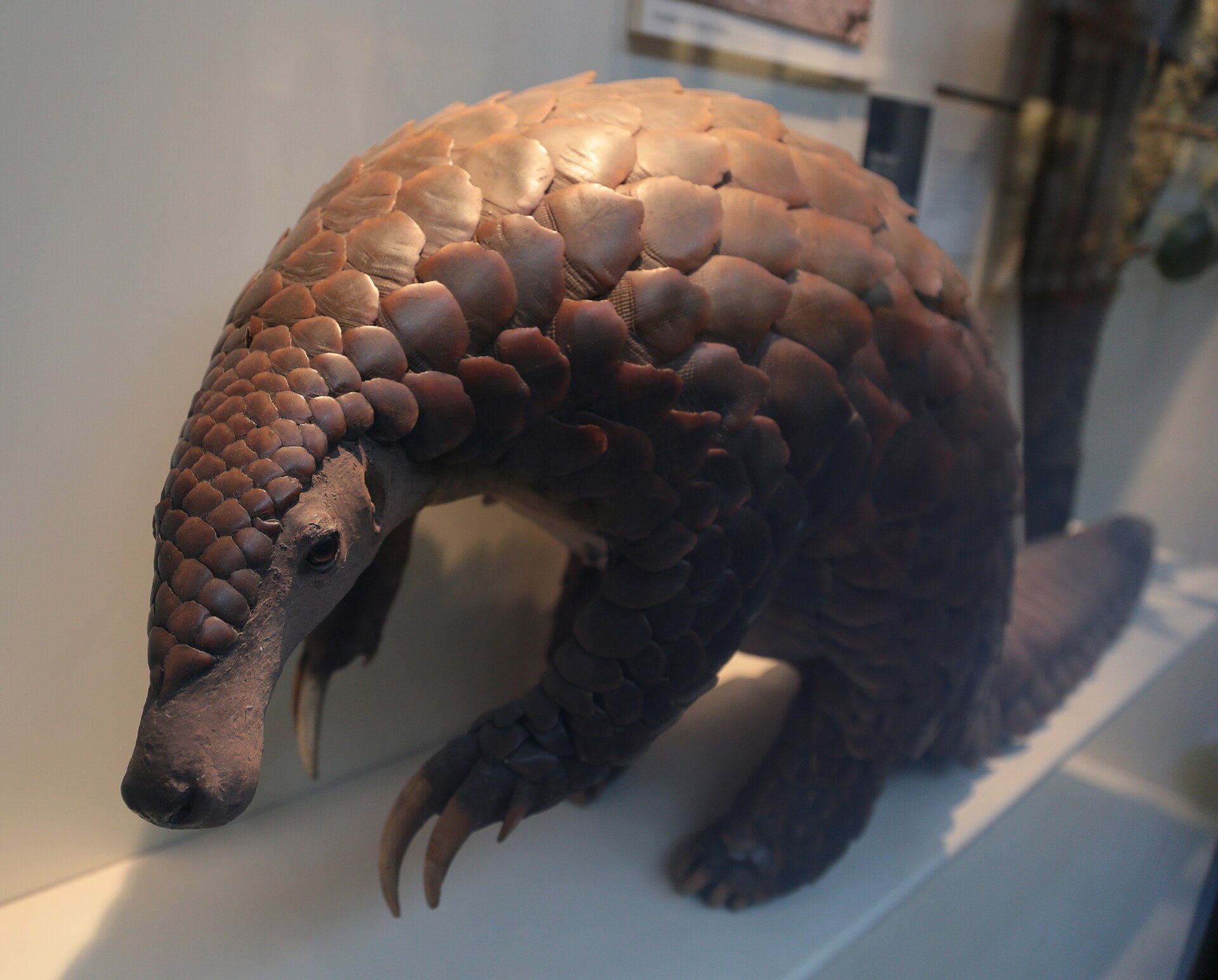
The giant pangolin inhabits many countries, with the largest concentration in Uganda, Tanzania. It is found mainly in the savanna, rainforest, and forest, inhabiting areas with large termite populations and available water. A small number of recorded sightings have occurred in western Kenya within the East African montane forests, the first being reported in 1971, with subsequent sightings being made in 2018. One of these sightings took place at 2,466 metres (8,091 ft) above sea level, the highest altitude the species has been recorded at.
Wikipedia contributors. (2025, February 7). Giant pangolin. In Wikipedia, The Free Encyclopedia. Retrieved 23:53, February 10, 2025, from https://en.wikipedia.org/w/index.php?title=Giant_pangolin&oldid=1274373207
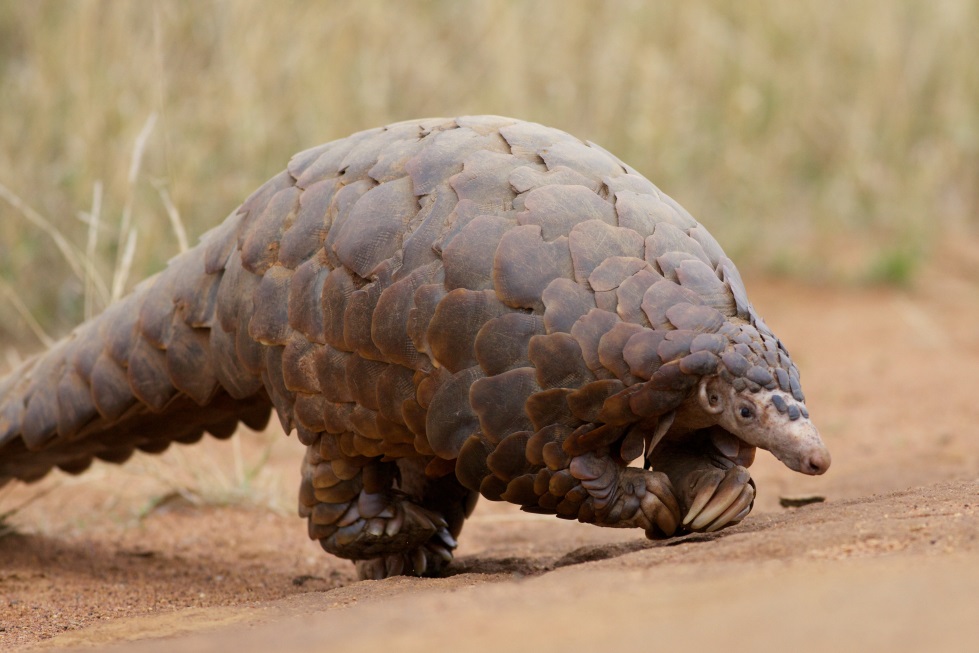
The Ground Pangolin species are native to 15 African countries dispersed throughout southern, central, and east Africa. S. temminckii is the only species found in southern and eastern Africa. It prefers savannah woodland with moderate amounts of scrub at low elevations.
Wikipedia contributors. (2025, February 7). Ground pangolin. In Wikipedia, The Free Encyclopedia. Retrieved 00:01, February 11, 2025, from https://en.wikipedia.org/w/index.php?title=Ground_pangolin&oldid=1274374667
Return to top of page --- Return to front page