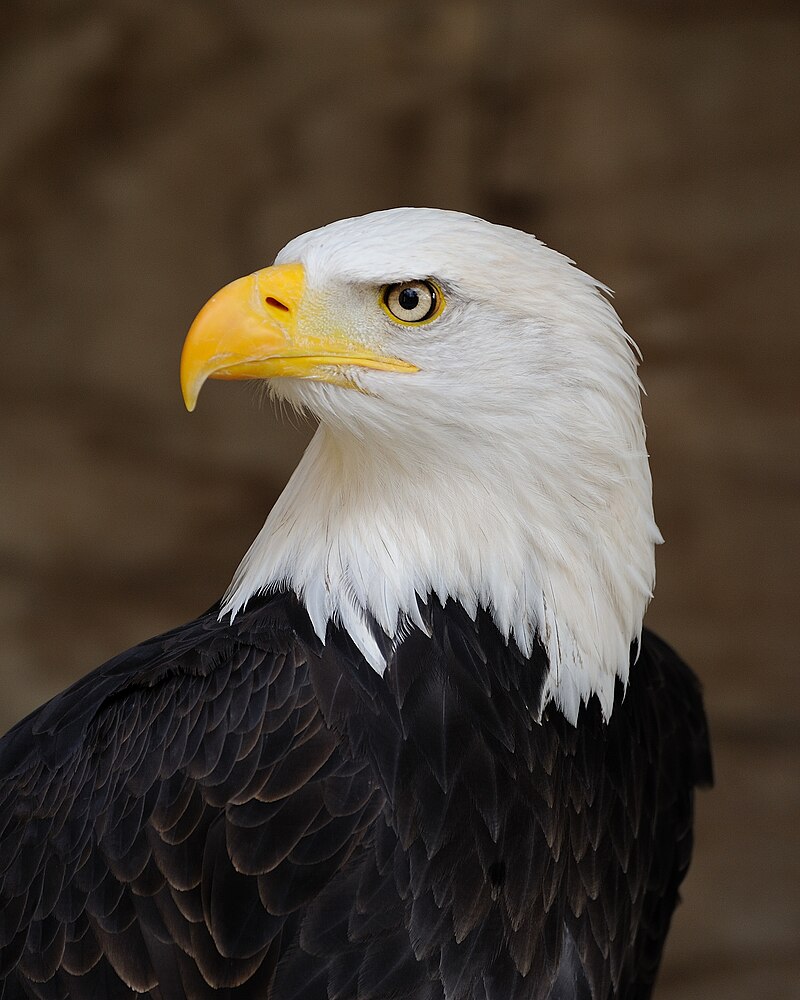
The bald eagle is placed in the genus Haliaeetus (sea eagles), and gets both its common and specific scientific names from the distinctive appearance of the adult's head. Bald in the English name is from an older usage meaning "having white on the face or head" rather than "hairless", referring to the white head feathers contrasting with the darker body.
There are two recognized subspecies of Bald Eagle
The plumage of an adult bald eagle is evenly dark brown with a white head and tail. The tail is moderately long and slightly wedge-shaped. Males and females are identical in plumage coloration, but sexual dimorphism is evident in the species, in that females are 25% larger than males
The bald eagle's natural range covers most of North America, including most of Canada, all of the continental United States, and northern Mexico. It is the only sea eagle endemic to North America. Occupying varied habitats from the bayous of Louisiana to the Sonoran Desert and the eastern deciduous forests of Quebec and New England, northern birds are migratory, while southern birds are resident, remaining on their breeding territory all year.